Sanitizing & Disinfection Services in San Jose & the South Bay in San Jose, CA
Extracting contaminated water removes what's standing on the surface — not the bacteria, viruses, and pathogens left behind. We apply EPA-registered, hospital-grade disinfectants as a dedicated step after every Category 2 and 3 water loss.
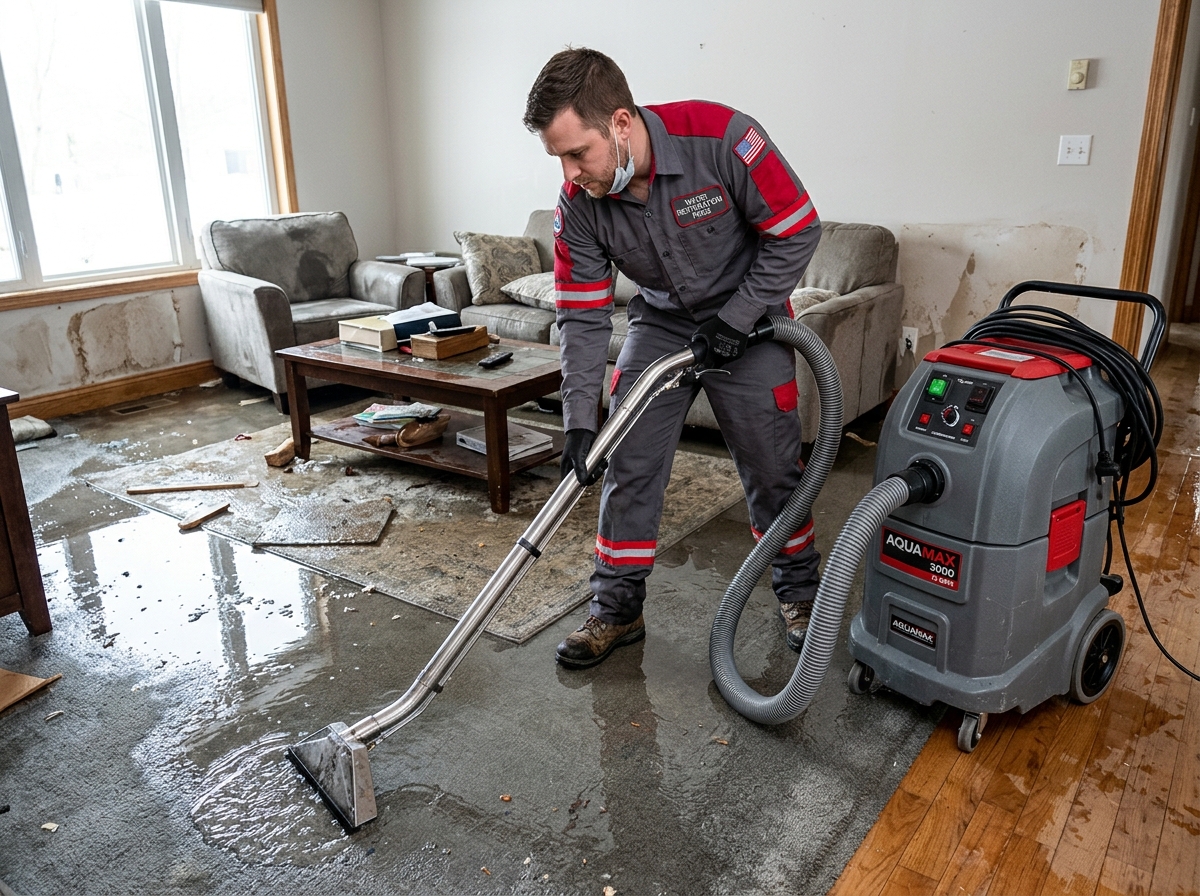
After sewage backups, toilet overflows, flood water intrusion, and any loss involving Category 2 or 3 water, the structure isn't safe to occupy when it's dry — it's safe when it has been properly disinfected. First Response Water Mold Fire Restoration applies EPA-registered, hospital-grade disinfectants as a dedicated, documented step so your property isn't just dry, it's actually pathogen-free.
We serve San Jose and the entire South Bay — Milpitas, Santa Clara, Campbell, Sunnyvale, Cupertino, Los Gatos, Mountain View, Fremont, Palo Alto, and surrounding communities — with technicians available 24 hours a day.
When Sanitizing & Disinfection Is Required
These are not edge cases — most water damage events involving anything beyond clean pipe water require professional disinfection as part of the mitigation scope.
After Any Sewage Backup or Category 3 Water Loss
This step is not optional — it is a required part of every sewage remediation. Fecal bacteria, E. coli, and hepatitis pathogens survive on surfaces long after the visible water is gone.
→ See Sewage Backup CleanupFollowing a Toilet Overflow with Waste-Containing Water
Any overflow involving water that has contacted waste — even partially — requires full disinfection of all contacted surfaces, not just cleaning.
→ See Toilet Overflow CleanupAfter Flood Water Intrusion from Outside
Groundwater and stormwater carry soil-borne bacteria, chemicals, and organic material from exterior sources. Surfaces look clean after extraction but are not pathogen-free.
Category 2 (Gray Water) Losses with Dwell Time
Appliance leaks or clean water losses that have been standing for 24–48+ hours transition from Category 1 to Category 2 and may require disinfection depending on conditions.
Any Surface That Contacted Contaminated Water
Visual cleanliness after extraction is not the standard. Any surface that contacted Category 2 or 3 water requires disinfection regardless of how it looks after drying.
Sanitizing & Disinfection vs. Standard Cleaning
Standard cleaning removes visible dirt and debris. Disinfection is a measured process using EPA-registered products — not a stronger version of wiping down a surface.
Standard Cleaning
- Removes visible dirt and debris
- No pathogen kill claim or verification
- No EPA registration required
- No specified dwell time
- Cannot be documented for insurance claim
EPA-Registered Disinfection
- Kills specific bacteria, viruses, and pathogens
- Independently tested and EPA-registered efficacy
- Required for Category 2 and 3 losses
- Manufacturer-specified dwell time enforced
- Documented for insurance claim and clearance records
Our 7-Step Sanitizing Process
A systematic protocol — not a spray-and-wipe. Every step has a reason.
Surface & Material Assessment
We identify every surface that contacted contaminated water and evaluate whether the material can be disinfected or must be removed. Porous materials like carpet padding that absorbed Category 3 water generally cannot be adequately disinfected and are removed instead.
Pre-Cleaning
Debris and gross contamination are removed from all surfaces before disinfectant is applied. Product effectiveness depends on direct contact with the surface — applying over residue reduces efficacy significantly.
EPA-Registered Disinfectant Application
Hospital-grade disinfectants rated for the specific contamination type — bacterial, viral, or broad-spectrum — are applied via sprayer, fogger, or direct surface application based on the material and area size.
Manufacturer-Specified Dwell Time
Products are left in place for the full contact time required to kill pathogens at rated efficacy. Cutting dwell time short — even with the correct product — reduces effectiveness. We don't skip this step.
Air Scrubbing (As Needed)
For larger contamination events or enclosed spaces, HEPA air scrubbers run alongside surface disinfection to address airborne particulates and aerosols released during the remediation process.
→ See Air Filtration & ScrubbingVerification & Drying
Treated surfaces are confirmed dry and the treatment coverage is cross-referenced against our contamination and moisture mapping to verify the full affected area was addressed.
Documentation
Product name, EPA registration number, application method, dwell time, and treated square footage are logged for your records and insurance claim submission.
Why Dwell Time Is Non-Negotiable
Every EPA-registered disinfectant has a manufacturer-specified contact time — the period the product must remain wet on the surface to kill pathogens at the rated concentration. Cutting dwell time short, even with the correct product at the correct dilution, significantly reduces pathogen kill rates. This is where most shortcut disinfection fails: the right product applied wrong.
Our technicians are trained on product-specific protocols and do not advance to the next step until dwell time requirements are fully satisfied.
Documentation That Supports Your Insurance Claim
When sanitizing and disinfection is part of a covered sewage, flood, or water damage loss, it's typically included in the mitigation scope as a required step — not an optional add-on. Having the right documentation prevents adjusters from questioning whether the work was done or whether the correct products were used.
Insurance Claims & Direct BillingEvery Treatment Includes Documentation Of:
- Product name and EPA registration number
- Contamination category and application rationale
- Application method (spray, fogger, direct)
- Dilution ratios per manufacturer specification
- Dwell time applied and verification
- Treated areas and square footage
- Before and after photographic records
- Technician name and certification on request
Related Services
Sewage Backup Cleanup
Full Category 3 biohazard extraction and remediation — disinfection is a required final step.
Learn MoreCategory 3 / Black Water Cleanup
Highly contaminated water removal from the most severe contamination classification.
Learn MoreToilet Overflow Cleanup
Rapid extraction and disinfection for waste-containing overflow events.
Learn MoreAntimicrobial & Disinfection Treatment
The parallel treatment step for mold remediation — EPA-registered fungicide and sporicide application.
Learn MoreAir Filtration & Scrubbing
HEPA air scrubbing to address airborne particulates released during contamination cleanup.
Learn MoreInsurance Claims
Direct billing to your carrier with documented mitigation records for a clean claim.
Learn MoreFrequently Asked Questions
Is sanitizing the same as the antimicrobial treatment used for mold?
They're related but not identical. Antimicrobial treatment (used in our mold and building-restoration work) is primarily focused on inhibiting mold and mildew growth — a fungal prevention application. Sanitizing and disinfection after contaminated water focuses on eliminating bacteria, viruses, and pathogens introduced by sewage, flood water, or other contamination. Some jobs require both.
→ See our Antimicrobial & Disinfection Treatment pageIs it safe to be in the space during and after treatment?
Products are applied according to label instructions, which specify a dry and ventilation time before re-occupancy. We provide the specific re-entry timeline for your situation before treatment begins — it varies by product, area size, and ventilation conditions.
How do I know the disinfection actually worked?
We follow manufacturer-specified application methods and dwell times rather than a quick spray-and-wipe, and document the process including product registration numbers and coverage areas. For situations requiring lab-verified clearance, we can refer you to an independent industrial hygienist for post-remediation testing — we don't perform that testing ourselves.
Does disinfection get rid of odor from sewage or contamination?
It helps significantly, since much of a contamination odor comes from the same bacterial sources that disinfection targets. However, persistent odor embedded deep in structural materials sometimes needs additional dedicated deodorization treatment beyond standard disinfection.
→ See Odor Removal & DeodorizationDoes insurance cover sanitizing and disinfection?
When it's part of a covered water, sewage, or contamination loss, sanitizing is typically included in the mitigation scope as a required step, not an optional add-on. We document product use and treated area for your claim and can bill your carrier directly.
→ See Insurance Claims & Direct BillingSanitizing & Disinfection Service Area
Serving San Jose and all South Bay communities — technicians available 24/7.
Emergency Water Damage?
Pay Zero Upfront.
Direct insurance billing on covered claims with no hidden catch. Get immediate water damage repair & extraction in San Jose today. Contact us to book a free on-site estimate!
Feel Free to Contact Us or Book Services
First Response: Your best solution for accurate, immediate, and professional help for all your water damage repair and restoration needs in San Jose and Silicon Valley.
- 24/7 Friendly Support
- Professional IICRC-Certified Specialists
- 15+ Years Local Experience in San Jose
- Direct Insurance Billing & Itemized Claims
- Same-Day Water Damage Extraction