Category 3 / Black Water Cleanup in San Jose: Stop Sewage Damage Fast
Category 3 black water — from sewage backups, toilet overflows, or outside flooding — contains dangerous pathogens that require immediate containment. We follow IICRC S500 protocols to extract, decontaminate, and structurally dry affected areas, documenting every step for your insurance adjuster.
What's Covered on This Page
Signs You're Dealing With Category 3 Black Water
Quick Summary: Category 3 black water is present any time water contacts sewage, comes from outside ground level, or originates from a drain, toilet, or sewer line — regardless of whether it looks clear or carries an obvious odor.
The IICRC S500 standard classifies water damage into three categories. Category 3 — the highest risk — includes all water that is grossly contaminated with pathogenic bacteria, viruses, or chemical agents. Most homeowners encounter it through a sewage backup or toilet overflow, but outside floodwater that enters at ground level or below is also Category 3 even if it appears clean.
Common Category 3 Sources in San Jose Homes:
- Sewage backups through floor drains, showers, or tubs — especially in older homes with clay sewer laterals.
- Toilet overflows involving fecal contamination, even if the water itself appears light in color.
- Floodwater from Coyote Creek, Guadalupe River, or storm drains that entered at or below ground level.
- Water that has been sitting undiscovered for more than 72 hours, regardless of its original source category.
- Washing machine or dishwasher overflow water that backed up through a sink or floor drain.
If you are unsure of the category, treat it as Category 3. Do not enter the space without PPE, and do not run HVAC that could spread airborne contaminants. Call us for a free on-site assessment.
When It's Not Black Water (And DIY Is Safe)
Not every water event is a biohazard. Category 1 (clean water) from a burst supply line or overflowing sink that you catch immediately may be safely handled yourself if the volume is small and no porous materials were saturated.
DIY cleanup is generally acceptable only when all of these conditions are true:
- The source is confirmed clean water — a cold supply line, ice maker, or fresh tank overflow.
- The volume is small (under a few gallons) and caught within minutes on tile or sealed concrete.
- No odor, no discoloration, and no moisture penetrated carpet padding, drywall, or wood subfloor.
- The surface dries completely within 1–2 hours using normal household fans and ventilation.
- No drain lines, waste pipes, or toilet bowls were involved in the water path.
If there is any doubt about the source, any odor, or any contact with porous material, do not attempt DIY cleanup. Once Category 3 water contacts drywall or subfloor, pathogens embed in the material and cannot be safely removed without professional disposal and antimicrobial treatment.
Why San Jose Properties Face Elevated Black Water Risk
San Jose's geography and housing stock create several compounding risk factors that increase the likelihood of Category 3 contamination events compared to newer suburban construction elsewhere in California.
- Aging Clay Sewer Laterals: Homes built before the 1970s in neighborhoods like Naglee Park, Olinder, and Gardner often have original clay sewer laterals that crack and allow root intrusion over decades, leading to main line blockages and backups.
- Coyote Creek & Guadalupe River Flood Zones: Properties within FEMA Zone AE along Coyote Creek and Guadalupe River — including parts of Willow Glen and downtown — experience recurring floodwater intrusion classified as Category 3 under IICRC S500.
- Older Raised Foundations with Crawl Spaces: Many 1940s–1960s San Jose bungalows have low crawl spaces where sewage backups and floodwater concentrate and stay hidden for days before discovery, dramatically increasing remediation scope.
- Multi-Unit Housing Shared Drain Lines: Duplexes and older apartment buildings near Downtown and East San Jose share main sewer lines. One unit's blockage can back sewage into multiple ground-floor units simultaneously.
Black water spreads fast — every hour matters.
Get a free on-site assessment. First Response Water Mold Fire is ready 24/7.
Our San Jose dispatch team is locally staged — not routed from a regional call center — which means faster arrival times for exactly the flood-prone and aging-infrastructure situations that this city presents.
Inside the Category 3 Cleanup Process, Step by Step
Every Category 3 job follows strict IICRC S500 biohazard protocols. Here is exactly what happens when our crew arrives:
Safety Assessment & Biohazard Containment
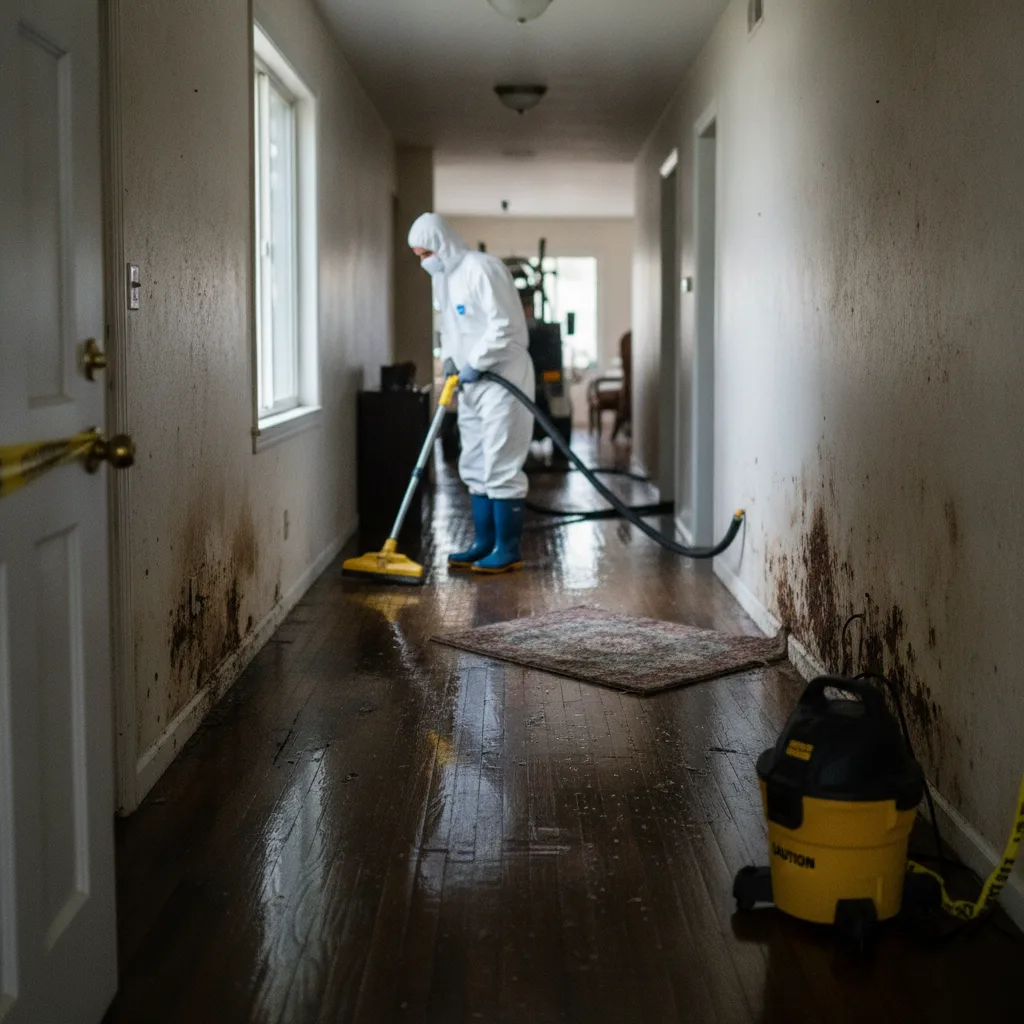
We determine the extent of contamination with moisture mapping, then seal the affected area with critical plastic barriers and establish negative air pressure to prevent cross-contamination to clean zones.
Rapid Category 3 Water Extraction
Truck-mounted high-capacity extractors remove standing black water before it saturates deeper into concrete, framing, or subfloor. Speed at this stage directly limits total remediation scope.
Removal of Non-Salvageable Porous Materials
Contaminated carpet padding, drywall sections, baseboards, and insulation that absorbed black water are safely bagged in accordance with biohazard disposal regulations and removed from the property.
Hospital-Grade Antimicrobial Treatment
EPA-registered hospital-grade disinfectants are applied to all salvageable hard surfaces, structural framing, and concrete slab to kill residual bacteria, viruses, and mold spores.
Structural Drying with Daily Moisture Logging
Industrial air movers and commercial dehumidifiers run continuously. Technicians return daily to log moisture meter readings and adjust equipment placement until all structural readings reach IICRC-standard dry levels.
HEPA Air Scrubbing & Odor Elimination
High-efficiency HEPA air scrubbers and hydroxyl generators run throughout drying to remove airborne pathogens, mold spores, and sewage odors from the indoor environment.
Every step is photographed and documented in a formal remediation report that satisfies insurance adjuster requirements. We handle direct billing with your carrier so you are not left managing paperwork during an already stressful situation.
Schedule a Free On-Site Inspection & EstimateHow Black Water Cleanup Costs and Insurance Claims Work
Category 3 cleanup costs vary significantly based on affected square footage, material saturation depth, and whether mold is already present. In San Jose, a contained single-room backup typically runs several thousand dollars; a flooded basement with structural involvement can be considerably more. The most important factors are speed of response and accurate initial assessment.
What Determines the Cost of Your Cleanup:
- Square footage of affected area and number of rooms involved.
- Depth of water penetration into subfloor, wall cavities, or crawl space.
- Volume of contaminated materials (drywall, insulation, carpet) requiring disposal.
- Whether secondary mold growth has already begun, requiring additional remediation scope.
- Duration of drying — more complex structures require longer equipment runtime.
Insurance Coverage — What to Know:
Sudden and accidental sewage backups are often covered under standard homeowner policies or optional sewer backup riders. However, flooding from outside groundwater typically requires a separate flood insurance policy. We provide complete documentation — moisture logs, remediation reports, and photo records — that insurance adjusters need, and we handle direct billing to keep your claim moving.
We provide a free, no-obligation on-site estimate before any work begins. There are no hidden fees and no upsell pressure — our goal is to give you an accurate scope and a clear plan.
Call 408-202-9356 for a Free EstimateCategory 3 Black Water Cleanup — FAQs
What makes water Category 3 (black water)?
Category 3 water is grossly contaminated and contains pathogenic agents. It includes sewage backups, toilet overflow with feces, floodwater that has entered from outside ground level, and any water that has touched Category 3 sources. IICRC S500 mandates specific containment, PPE, and disposal protocols for all Category 3 situations.
Can I clean up black water myself?
No. Category 3 water contains bacteria, viruses, and parasites that cannot be safely removed without commercial containment, EPA-registered hospital-grade disinfectants, HEPA air filtration, and proper disposal of porous materials. DIY attempts risk serious illness and will void most homeowner insurance claims if not documented by a certified contractor.
How long does Category 3 cleanup take?
Most residential jobs in San Jose are completed in 3–7 days: 1 day for extraction and demo, followed by 3–5 days of structural drying verified by daily instrument readings. Larger commercial properties or homes with extensive contamination may take longer.
Does homeowner insurance cover black water cleanup?
Coverage depends on the source of the backup. Sudden and accidental sewage backups are often covered under standard policies or optional sewer backup riders. Flooding from outside groundwater typically requires a separate flood insurance policy (NFIP or private). We provide full insurance documentation and handle direct billing to streamline your claim.
What is the difference between sewage backup cleanup and Category 3 cleanup?
Sewage backup describes the event; Category 3 describes the IICRC water classification that drives the remediation protocol. All sewage backups are Category 3, but not all Category 3 situations are sewage backups — floodwater entering from outside is also Category 3, even if it looks clean, because it has contacted ground contaminants.
Do you serve areas outside San Jose for black water cleanup?
Yes. We serve the entire South Bay including Santa Clara, Sunnyvale, Campbell, Los Gatos, Milpitas, Fremont, and surrounding communities. Our trucks are locally staged for fast dispatch across the region.
Emergency Water Damage?
Pay Zero Upfront.
Direct insurance billing on covered claims with no hidden catch. Get immediate water damage repair & extraction in San Jose today. Contact us to book a free on-site estimate!
Feel Free to Contact Us or Book Services
First Response: Your best solution for accurate, immediate, and professional help for all your water damage repair and restoration needs in San Jose and Silicon Valley.
- 24/7 Friendly Support
- Professional IICRC-Certified Specialists
- 15+ Years Local Experience in San Jose
- Direct Insurance Billing & Itemized Claims
- Same-Day Water Damage Extraction