
Moisture Mapping & Monitoring in San Jose: Find Hidden Water Before It Becomes a Bigger Problem
Water travels along framing and subfloors far beyond what's visible on the surface. We use infrared thermal imaging cameras and calibrated moisture meters to map moisture boundaries, log daily psychrometric readings, and prove your property is truly dry.
How Moisture Mapping and Monitoring Works
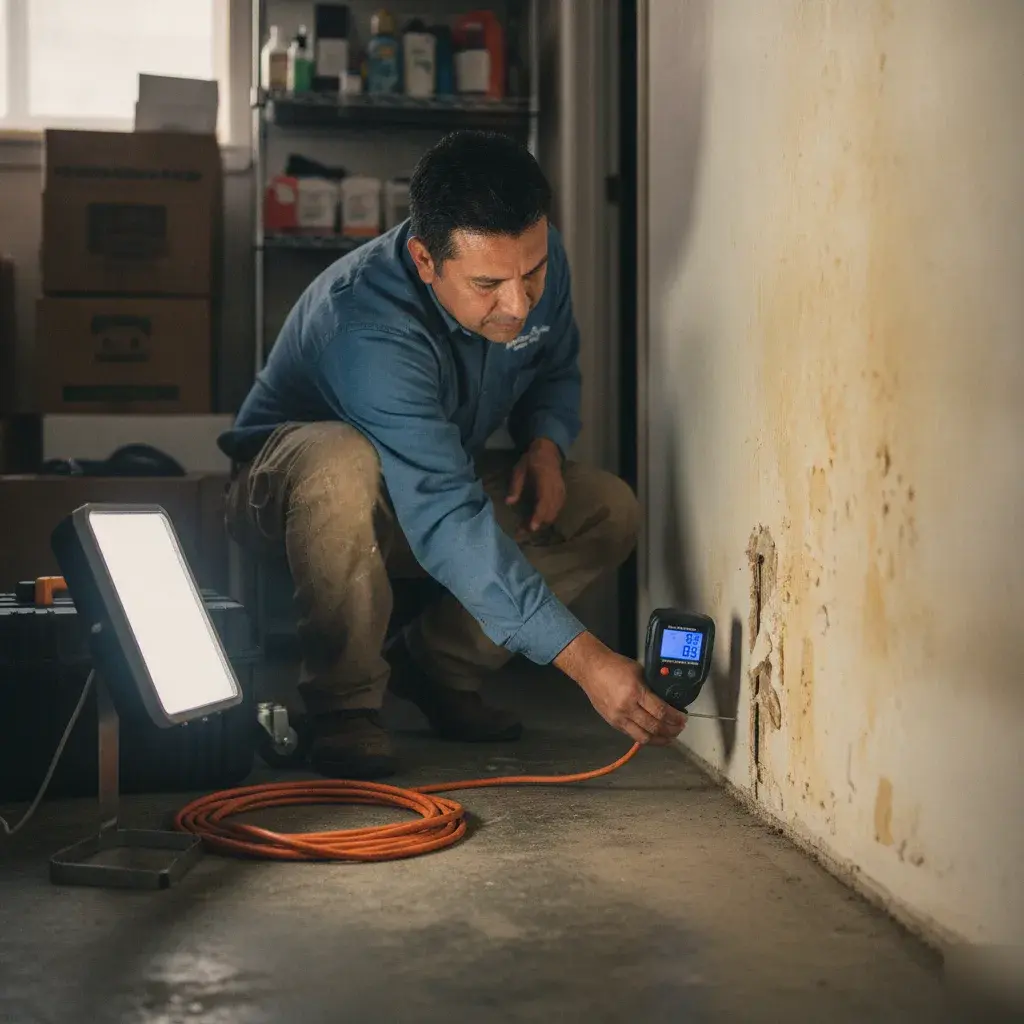
How do we find water you can't see? We start with a moisture meter and a thermal camera. We walk the whole affected area, not just the spot that looks wet. Drywall, subfloor, baseboards, the underside of cabinets - water travels, and it hides in places you'd never guess to check.
Take Baseline Moisture Readings
On every affected material: wood, drywall, concrete, and carpet pad.
Mark Every Reading Point
We mark each measurement spot so we return to the exact same location on every follow-up visit.
Log Readings Daily During Drying
We track how fast materials are releasing water while dehumidification equipment runs.
Adjust Equipment Placement Scientifically
More airflow where drying is lagging, less dehumidification where targets are met.
Confirm Dry Standard (IICRC S500)
We confirm the space meets certified dry standards before pulling equipment.
That daily log matters more than people realize. An adjuster wants to see documented proof that a space dried, not just someone's word for it. This mapping data becomes part of the file we build for your claim. It lines up with how we handle everything on the water side of a loss. You can read about our water damage restoration process.
Some jobs need three days of monitoring. Others, especially crawl space or slab leak situations around older San Jose homes, need a week or more before readings settle. We don't guess on this part - the numbers tell us when it's done.
Moisture Risks Differ Between Crawl Space and Slab Foundation Homes
Not every San Jose house hides water the same way. Older homes around Willow Glen and Naglee Park often sit on raised foundations with a crawl space underneath. That crawl space becomes the first place moisture pools after a slab leak, a plumbing drip, or just poor drainage from clay soil. We check crawl spaces with moisture meters because you can't see what's happening under the house. By the time you smell it, the wood framing has probably been wet for weeks.
Newer construction, and many homes in the Evergreen and Berryessa areas, sit on a concrete slab instead. No crawl space means no visible pocket for water to gather. Instead moisture travels sideways under flooring, up through hairline cracks, or along the slab edge near exterior walls. It's sneakier. You won't smell it as fast, and you definitely won't see it.
Our moisture mapping and daily monitoring approach changes based on foundation type. Crawl space homes get moisture readings at multiple points across the sub-floor and framing. We track these readings over several days to see if levels are dropping or holding steady. Slab homes need readings taken along baseboards, at flooring seams, and sometimes through the slab itself, especially after a suspected slab leak cleanup.
The homeowner often has no idea which type of foundation creates the bigger risk for their situation. Get it wrong, and you're drying the wrong area while the real moisture keeps spreading somewhere you're not looking.
Ready when you are - get in touch today.
Get a Free Estimate. First Response Water Mold Fire is ready to help.
When Moisture Monitoring Isn't Necessary
Not every wet spot needs a moisture meter pointed at it. Sometimes it's just condensation. Sometimes it's a spill that dried before dinner. We'd rather tell you that straight than send someone out for nothing.
Say your dishwasher leaked a cup of water onto the kitchen floor. You mopped it up within the hour, and the next morning the tile's bone dry with no smell. That's not a job for moisture mapping. It's a job for a towel.
Situations that do NOT require diagnostic monitoring:
- A small spill or splash that dried within a day or two, with no lingering smell.
- Window condensation in winter that clears once you open a window or run a fan.
- An old, dried water stain from a problem you already fixed months ago.
- Surface fog on a shower door or mirror after a hot shower.
- A damp spot you can fully see and reach, not tucked behind a wall or under flooring.
The real question is whether moisture is hiding somewhere you can't check yourself. If you can see it, dry it, and it stays dry, you're probably fine. Monitoring earns its keep when water's gone somewhere you can't follow it with your eyes: under subfloor, inside a wall cavity, behind baseboards.
Confirming a Structure Is Fully Dry
Dry to the touch means nothing. We've walked into homes where the carpet felt fine but the subfloor underneath was still holding water like a sponge. We don't call a job done based on how a room feels or smells. We call it done when the numbers say so.
Every material has a dry standard — a moisture content range it should sit at once restoration is complete. Drywall, wood framing, subfloor, they all have their own baseline. Our team compares daily readings from the affected area against an unaffected reference point in the same building. Once both numbers match and hold steady, that's real confirmation.
Our Verification & Logging Standards:
- Moisture meter readings on studs, subfloor, and drywall at the same marked points each visit.
- Relative humidity and temperature checks inside the drying chamber versus the rest of the structure.
- Thermal imaging to catch pockets equipment might have missed.
- At least 24 to 48 hours of stable readings before equipment comes out.
We photograph and log every reading. That documentation matters if you're filing an insurance claim. It shows the adjuster exactly when the structure hit dry standard and why we made the call to pull equipment. No guessing, no shortcuts. Just data that backs up the work.
Schedule a Moisture Inspection or Insurance ConsultationFrequently Asked Questions
Common questions about Moisture Mapping & Monitoring in San Jose.
How fast can you check my San Jose home for hidden moisture?
We're locally based in San Jose and available 24/7, so we can get to your home quickly once you call. Hidden moisture doesn't wait, and neither should you. When you call, we'll ask a few questions about what you're seeing or smelling to figure out how urgent the check is. Older homes near Willow Glen and Rose Garden with crawl spaces often need faster attention, since water can sit under the flooring for weeks without any visible sign.
What happens when your team arrives to check for moisture?
We walk the whole affected area with a moisture meter and thermal camera, not just the spot that looks wet. Water travels, so we check drywall, subfloor, baseboards, and even under cabinets. We take baseline readings on every material involved, then mark each point so we can return to the exact same spot on future visits. This gives you real data, not a guess, and it becomes part of the documentation for your file.
Are older San Jose homes more likely to have hidden moisture problems?
Yes, especially homes in Willow Glen and Naglee Park with raised foundations and crawl spaces. These spaces trap moisture longer than newer slab construction, and clay soil drainage issues around older lots can make it worse. By the time you smell anything, wood framing under the house may have been wet for weeks. Newer slab homes in areas like Evergreen and Berryessa hide moisture differently, moving it sideways under flooring instead of pooling in a crawl space.
How long does moisture monitoring take before a space is fully dry?
It depends on the situation, but some jobs finish in three days while others take a week or more. Crawl space and slab leak situations in older San Jose homes tend to need longer monitoring before readings settle. We log moisture levels daily while drying equipment runs and confirm the space meets IICRC S500 dry standards before pulling equipment. We don't guess on timing. The numbers tell us when the job is done.
Do I need moisture mapping if I don't see any water damage?
Maybe, it depends on whether moisture is hiding somewhere you can't check yourself. If you can see a damp spot, dry it, and it stays dry, you probably don't need us. But musty smells, sticking doors, or softness in flooring near a bathroom can point to water trapped behind walls or under subfloor. Monitoring earns its keep when the moisture has gone somewhere your eyes can't follow.
Does foundation type change how you check for moisture in San Jose homes?
Yes, our approach changes based on whether your home has a crawl space or a slab foundation. Crawl space homes, common in older Willow Glen and Naglee Park properties, get readings taken at multiple points across the sub-floor and framing over several days. Slab homes, more common in newer Evergreen and Berryessa construction, need readings along baseboards, flooring seams, and sometimes through the slab itself after a suspected leak.
Emergency Water Damage?
Pay Zero Upfront.
Direct insurance billing on covered claims with no hidden catch. Get immediate water damage repair & extraction in San Jose today. Contact us to book a free on-site estimate!
Feel Free to Contact Us or Book Services
First Response: Your best solution for accurate, immediate, and professional help for all your water damage repair and restoration needs in San Jose and Silicon Valley.
- 24/7 Friendly Support
- Professional IICRC-Certified Specialists
- 15+ Years Local Experience in San Jose
- Direct Insurance Billing & Itemized Claims
- Same-Day Water Damage Extraction