
Flood Damage Cleanup in San Jose: Fast Help Before Mold Sets In
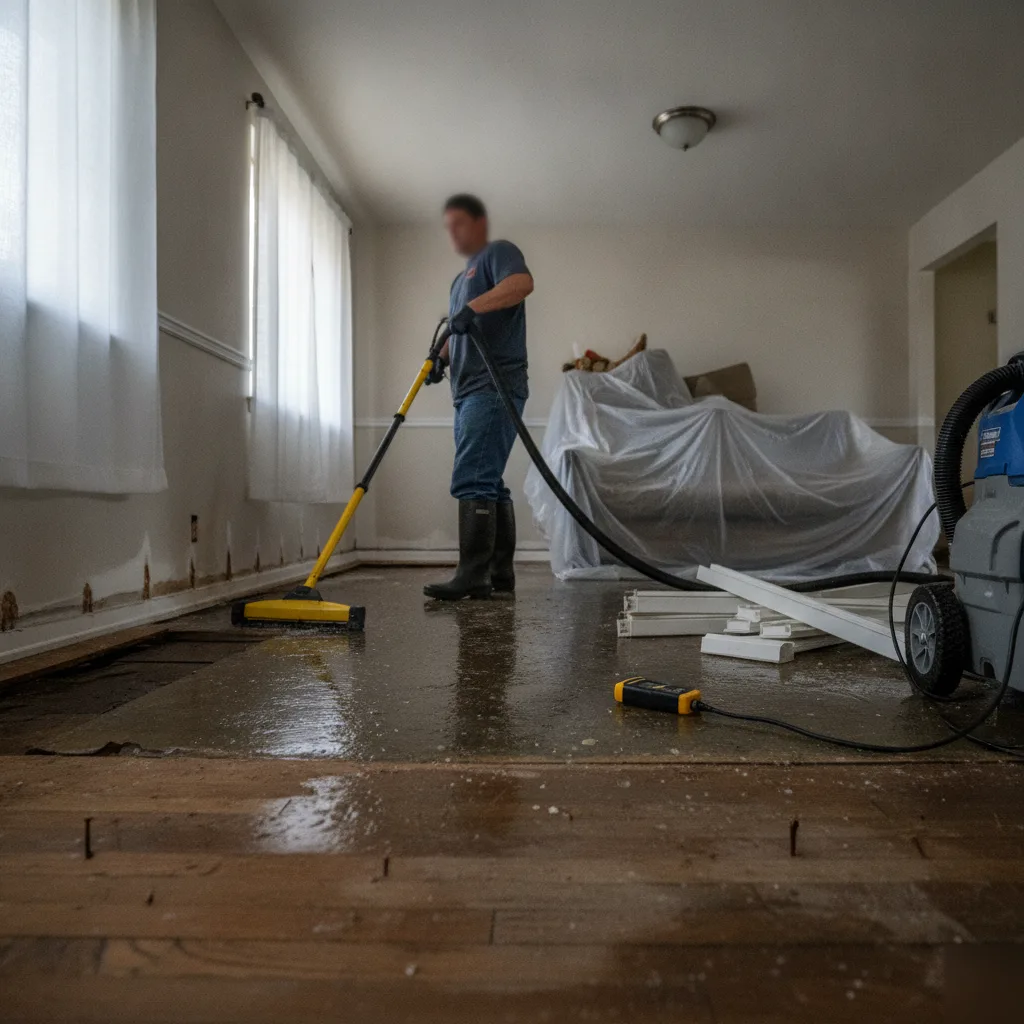
Whether triggered by storm runoff along Coyote Creek, a pressurized plumbing burst, or a major appliance failure, floodwaters saturate floors and structural framing fast. We provide rapid heavy-duty water extraction, thermal moisture mapping, and complete structural dry-out.
Flood Water Sources That Trigger a Cleanup Call
Quick Summary: Not all flood water is the same. The source matters more than most people think. A burst pipe, a sewage backup, and a roof leak all need different equipment and safety steps. Knowing where your water came from helps you describe the problem clearly when you call.
The first question we ask on every call: where is this water coming from?It sounds simple, but it's not always obvious. A ceiling stain might mean a slow roof leak, or it might mean a pressurized pipe inside the wall failed overnight.
The source changes everything: clean water from a supply line behaves differently than gray water from a washer, and both are completely different from contaminated black water backing up through a drain.
Common Flood Water Triggers in San Jose:
- Burst pipes or pressurized plumbing leaks behind walls or under concrete slabs.
- Major appliance failures: 50-gallon water heaters, dishwashers, and washing machine supply lines.
- Roof or ceiling leaks following severe winter storms, especially around degraded flashing.
- Sewage backups or toilet overflows, requiring Category 3 biohazard protocols.
- Under-slab plumbing leaks, aggravated by Santa Clara Valley's expansive clay soil.
That clay soil issue is real across San Jose. Soil expands when saturated by winter storms and shrinks during hot summer months. Over decades, that movement puts severe bending stress on pipes under your concrete slab.
Slab leaks don't always announce themselves with a torrent: warm spots on floors, sudden water bill spikes, or faint water hisses are early clues before widespread flooding occurs.
When a Small Spill Doesn't Need Professional Cleanup
Not every wet spot needs a truck in your driveway. A knocked-over water glass, a small fridge drip you caught the same day, or a pet bowl spill on tile—grab a towel and move on. If water touched a hard sealed surface and was dried within an hour or two, you're fine.
Here is how to determine if a spill is safe to handle yourself:
You do NOT need a restoration crew if:
- Water covers less than a few square feet and never soaked into carpet padding or drywall.
- The surface is tile, sealed concrete, or vinyl—not hardwood or floating laminate.
- You caught it within an hour or two and it is completely dry to the touch now.
- There is no musty or damp odor forming a day later.
- No water reached baseboards, electrical outlets, or subflooring.
Ask yourself: did water sit overnight? Did it touch drywall, subfloor, or carpet padding? Those porous materials hold water like a sponge. That is where mold starts within 24 to 48 hours.
See our main water damage restoration overviewWhat Your Insurance Covers After a Flood
Here is the part nobody explains until you're standing in wet carpet: flood insurance and homeowner's insurance are not the same thing.
Flood insurance covers rising outdoor water (such as Coyote Creek overflowing or storm runoff entering over foundation grade). Homeowner's insurance covers sudden, accidental internal water losses (like a burst pipe, water heater tank blowout, or washing machine hose failure). Most calls we receive in San Jose fall into this second category.
General Policy Coverage Distinctions:
- Sudden pipe bursts, appliance leaks, and fixture overflows are typically covered under standard homeowner policies.
- Sewage backups frequently require a specific endorsement or rider on your policy.
- Secondary mold damage resulting directly from an active covered water event is often included.
- Slow leaks that accumulated over months with visible neglect are the ones insurers push back on hardest.
Ready when you are - get in touch today.
Get a Free Estimate. First Response Water Mold Fire is ready to help.
Adjusters require proof: moisture readings, psychrometric logs, and pre-demolition photos are what separate an approved claim from a disputed one. We document everything to IICRC S500 standards and handle direct insurance billing so you don't have to navigate paperwork alone.
The Flood Cleanup Process, From Extraction to Verified Dry
Flood cleanup is not just running a shop-vac and pointing a fan at the carpet. There is a precise order required to prevent hidden mold and structural degradation:
Emergency Water Extraction
Truck-mounted and high-volume extractors pull standing water from floors and carpets immediately upon arrival.
Moisture Mapping & Thermal Imaging
We check walls, subfloors, and structural framing with penetrating meters to map the exact water boundary.
Containment & Equipment Placement
Industrial air movers and desiccant/LGR dehumidifiers are positioned based on room cubic volume and saturation levels.
Daily Psychrometric Monitoring
Technicians return daily to test moisture content and adjust equipment to match drying curves.
Hospital-Grade Antimicrobial Treatment
EPA-registered antimicrobials applied to crawl spaces, framing, and subfloors to prevent mold spore propagation.
Scientific Dry Verification
Equipment is only removed when instrument readings match verified dry standards from unaffected rooms.
Older homes near Willow Glen have original hardwood flooring that cups quickly when flooded. We deploy specialized vacuum mat systems to draw moisture up through the wood planks without needing demolition.
What Drives Flood Cleanup Costs Up or Down
Nobody wants a mystery bill after a flood. The biggest variable is the water category: clean supply line water costs less and dries faster than Category 3 sewage backups, which require containment and hazardous waste disposal.
Square footage matters, but materials and saturation depth matter even more:
- How long water sat before mitigation started (speed directly affects salvageability).
- Whether moisture wicked into wall cavities, subflooring, or crawl space framing.
- Water classification: Clean (Cat 1), Gray (Cat 2), or Black (Cat 3).
- Total square footage and number of multi-level floors affected.
- Whether personal contents require professional pack-out and climate-controlled storage.
Before hiring any contractor, verify that they provide certified moisture logs and direct insurance billing. We offer a free on-site estimate so you get real numbers for your property.
Request a Free Estimate & Flood Inspection
Emergency Water Damage?
Pay Zero Upfront.
Direct insurance billing on covered claims with no hidden catch. Get immediate water damage repair & extraction in San Jose today. Contact us to book a free on-site estimate!
Feel Free to Contact Us or Book Services
First Response: Your best solution for accurate, immediate, and professional help for all your water damage repair and restoration needs in San Jose and Silicon Valley.
- 24/7 Friendly Support
- Professional IICRC-Certified Specialists
- 15+ Years Local Experience in San Jose
- Direct Insurance Billing & Itemized Claims
- Same-Day Water Damage Extraction