
Emergency Water Extraction & 24/7 Cleanup in San Jose: Help When Water Won't Wait
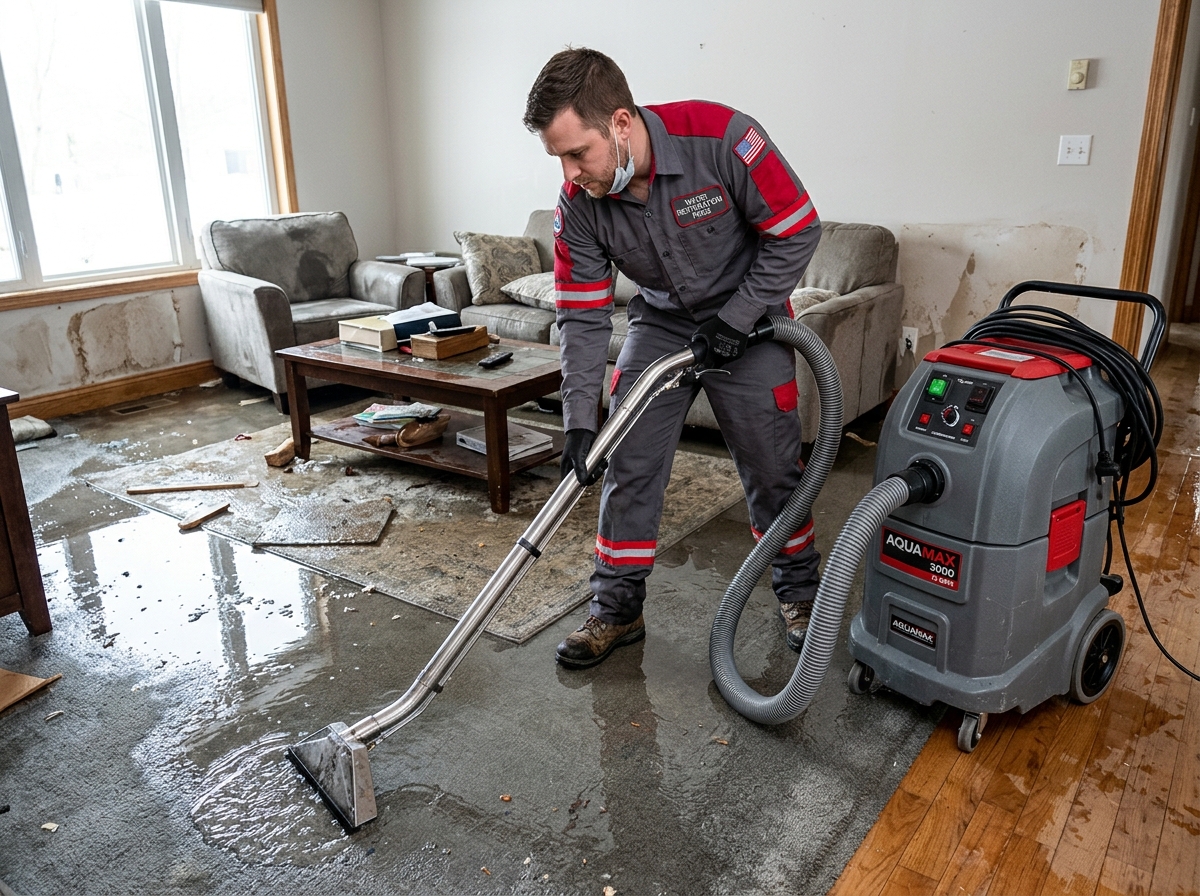
Got standing water on your floor right now? Every hour standing water sits increases structural destruction. We provide 24/7 immediate emergency extraction, truck-mounted pumping, and precision drying across San Jose and the South Bay.
What's Covered on This Page
Signs Your Property Needs Emergency Water Extraction Right Now
Quick Summary:Standing water, spreading stains, warped flooring, and musty smells all point to a problem that needs extraction now, not later. Water that sits for more than 24 to 48 hours starts soaking into drywall, subfloor, and framing. This turns a cleanup job into a bigger repair. If you're seeing any of these signs, that's the moment to call, not wait and watch.
So how do you know if this is a real emergency? Some leaks can wait until morning. A slow drip under the bathroom sink probably can. But once water is spreading across flooring or dripping through a ceiling, the clock is running.
- Standing water on floors, even a shallow layer, especially near hardwood or laminate.
- A ceiling stain that's growing or feels soft and spongy when you press on it.
- A musty, damp smell showing up in a room where you haven't noticed one before.
- Baseboards or drywall that look swollen, bubbled, or discolored near the floor.
- A water heater, dishwasher, or washing machine that's leaked and kept running.
- Sewage backup or toilet overflow. This needs black water cleanup right away.
We get calls where someone noticed a small stain on the ceiling two days ago and figured it would dry out on its own. It doesn't. It just spreads into the insulation above and starts feeding mold behind the drywall. That's the pattern we see constantly in older San Jose homes with plaster ceilings, where damage hides longer before it shows on the surface.
Not sure if what you're looking at counts as an emergency? That's a normal question. If there's active water movement, a bad smell, or any chance the source is still leaking, treat it like one.
The First-Hour Decision: Call Now or Monitor
Not every wet spot is an emergency. But some are, and the first hour is when that gets decided. Here's how we tell the difference on the phone before a truck ever rolls:
- Water covering more than a few square feet, or spreading toward outlets and baseboards.
- Any sewage or toilet overflow. This is black water and it's a health issue, not just a mess.
- Water that's been sitting more than an hour or two already.
- You can't find the source, like a slab leak or a pipe inside a wall.
- Drywall, flooring, or trim already feels soft, swollen, or spongy.
If you're seeing any of that, call. Don't wait to see if it dries on its own. It won't. Every hour raises the odds of mold setting in. The damage that costs the most started as something small someone waited on.
Now, a spilled glass of water or a dishwasher that leaked a cup onto a tile floor and got wiped up fast? Monitor that one. No standing water after an hour, no smell, no soft spots the next day, you're probably fine.
Small Spills You Can Handle Without a Professional Crew
Not every wet spot needs a phone call to us. We'll tell you that straight, even though it costs us nothing to say otherwise.
A glass of water knocked over on the counter? Grab a towel. A little condensation on a window sill during a cold January morning? Wipe it down. These things happen in every home, and they don't damage anything if you catch them fast.
- A spill on hardwood or tile that you dry within a few minutes.
- A sink overflow you catch and mop up the same hour.
- Light condensation on windows or pipes with no pooling underneath.
- A dishwasher door left cracked open with a small puddle on the floor.
The line that matters is time, not the size of the puddle. Water sitting for a couple hours on a hard surface is usually fine. Water sitting for 24 to 48 hours, or water that's touched baseboards, carpet padding, or drywall, is a different story. That's when it starts moving into places you can't see or dry with a towel.
So here's a quick gut check: Did it soak into anything soft? Did it reach a wall? Can you still see it, or has it disappeared under something?If you're just wiping a countertop, you're fine on your own. If you're wondering whether the water went somewhere you can't reach, that question alone is worth answering before you decide it's nothing.
Thinking about Emergency Water Extraction & 24/7 Cleanup?
Get a Free Estimate. First Response Water Mold Fire is ready to help.
Inside a 24/7 Water Extraction Job in San Jose
So what happens when our crew shows up? The homeowner just wants to know someone competent is finally in the room. Older San Jose homes near Willow Glen, with original hardwood subfloors, need a different drying approach than a slab-on-grade house in Cambrian Park. We don't guess. We measure.
Inspect & Document the Source
Whether it's a burst pipe, appliance leak, or sewage backup, we photograph everything for your insurance file.
Extract Standing Water with Industrial Pumps
Truck-mounted or portable high-capacity pumps pull out the bulk of water fast before it soaks deeper into flooring and drywall.
Map Moisture Levels Behind Walls & Floors
We use calibrated moisture meters and thermal imaging to find water you can't see or feel yet.
Deploy IICRC S500 Air Movers & Dehumidifiers
Commercial drying equipment is placed strategically based on real moisture readings rather than guesswork.
Daily Moisture Monitoring & Adjustments
We check moisture levels daily until materials hit standard baseline dryness, adjusting equipment as rooms dry.
Complete Documentation for Direct Insurance Billing
You aren't stuck translating technical readings into a claims form yourself — we handle it directly with your adjuster.
That daily monitoring step trips people up. They think once the fans are running, the job's done. It's not. Drywall can look dry on the surface, and still hold moisture two inches in. We've seen it plenty of times in South San Jose homes with slab leaks. Skip the monitoring, and you're rolling the dice on mold showing up in three weeks instead of never.
Drying Verification and Insurance Documentation
Here's the part people don't think about until they're in it. Drying isn't done when the carpet feels dry to your hand. It's done when the numbers say so.
We use moisture mapping and daily monitoring to track every wet area, day by day, room by room. Walls, subfloor, baseboards, framing behind the drywall. A moisture meter doesn't lie, your fingers do. That's why we log readings each visit and compare them against dry standard targets, following the IICRC S500 water damage guidelines. Structural drying and dehumidification equipment stays in place until those readings hit target, not until it looks fine.
What Insurance Adjusters Need (And What We Provide):
- Daily moisture readings for every affected material.
- Photo documentation from first extraction through final dry reading.
- Equipment placement and run-time records.
- A completed drying log an adjuster can review line by line.
We handle direct insurance billing and work straight with your adjuster. You aren't stuck translating field notes into claim language. Not sure where to start with your policy? That's the most common question we get, and it's a fair one. We also offer a free on-site estimate before any work begins, so you know what you're dealing with before you decide anything.
Request a Free Estimate & Insurance Billing ConsultationFrequently Asked Questions
Common questions about Emergency Water Extraction & 24/7 Cleanup in San Jose.
How fast can you get to a water emergency in San Jose?
We treat active water emergencies as calls that need a truck rolling right away, day or night. Response speed depends on how far you are from our base and current call volume, but our team is set up for 24/7 dispatch across San Jose. When you call, we ask questions about standing water, source, and how long it's been sitting so we can prioritize correctly. That first phone call shapes how fast we move, so be ready to describe what you're seeing.
What should I expect when your crew arrives for water extraction?
Your crew starts by finding and documenting the water source, then moves straight into extraction with pumps before it soaks deeper into flooring. We photograph everything for your insurance file first, since that documentation matters later. After the standing water is gone, we map moisture behind walls and under flooring with meters, not guesswork. Then we place air movers and dehumidifiers based on those readings. You'll see equipment running, but the real work is the daily moisture checks that follow.
Why do older San Jose homes take longer to dry out after a leak?
Older homes near Willow Glen with original hardwood subfloors and plaster ceilings hide water damage longer than newer construction. Water soaks into original materials and framing before it shows on the surface, so what looks like a small stain can mean bigger moisture underneath. A slab-on-grade house in Cambrian Park dries differently than a home with a crawlspace or original subfloor. That's why we measure moisture levels room by room instead of using one drying plan for every property type.
How long does the water extraction and drying process usually take?
Drying continues until materials hit dry standard, which we check daily rather than guessing based on how things look. Surface-dry drywall can still hold moisture two inches in, so the visible fans running isn't the finish line. Extraction itself, pulling out standing water with pumps, happens fast within the first hours on site. The drying phase that follows takes longer and depends on how much water soaked into flooring, subfloor, or framing before we arrived.
Is a small water spill something I can clean up myself?
Yes, if you catch it fast and it hasn't touched anything soft like carpet padding or drywall. A spill wiped up within minutes, or light window condensation, usually causes no damage. The real question is whether water reached a wall or soaked into something you can't dry with a towel. Water sitting for 24 to 48 hours, or touching baseboards, needs a different response. If you're unsure which side you're on, that's worth a quick call.
How do I know if a leak counts as an emergency worth calling about?
It's an emergency once water is spreading across flooring, dripping through a ceiling, or coming from a sewage backup. Standing water, a growing ceiling stain, or a musty smell that wasn't there before are all signs the clock is running. Water sitting more than an hour or two, or a source you can't find like a slab leak, also counts. A slow drip under a bathroom sink can usually wait until morning, but active water movement shouldn't.
Emergency Water Damage?
Pay Zero Upfront.
Direct insurance billing on covered claims with no hidden catch. Get immediate water damage repair & extraction in San Jose today. Contact us to book a free on-site estimate!
Feel Free to Contact Us or Book Services
First Response: Your best solution for accurate, immediate, and professional help for all your water damage repair and restoration needs in San Jose and Silicon Valley.
- 24/7 Friendly Support
- Professional IICRC-Certified Specialists
- 15+ Years Local Experience in San Jose
- Direct Insurance Billing & Itemized Claims
- Same-Day Water Damage Extraction