
Ceiling Leak / Roof Leak Water Damage in San Jose: What to Do Before the Stain Becomes Structural
A roof leak or overhead pipe drip saturates attic insulation, weakens ceiling drywall, and damages framing. We respond same-day with moisture mapping, emergency extraction, and structural drying to stop ceiling collapse.
What's Covered on This Page
Diagnose the Leak: Emergency Drip or Watch-and-Wait Stain
Quick Summary:A dark, spreading, or dripping stain means active water is moving through your ceiling right now and needs a same-day call. A dry, flat, yellowish ring with no growth is old damage from a leak that's already been fixed, and it can wait for a normal inspection.
How do you tell them apart? Look at the edges first. A fresh leak has a soft, wet-looking border that keeps growing day to day. An old stain has a hard, ring-shaped edge that hasn't moved in weeks. Press it gently with your finger. Soft or spongy drywall means water is still in there.
Ceiling leak or roof leak water damage almost always starts small, a coin-sized spot, then grows fast once rain season hits. We see a lot of it in older homes near downtown San Jose with original built-up roofing from the 60s and 70s. Those roofs weren't built for the heavier winter storms we've had lately. Small cracks let water track along rafters before it ever shows up on the ceiling below.
What Your Ceiling Stain is Telling You:
- Growing or darkening stain: Active leak, call for same-day evaluation.
- Sagging or bubbling drywall: Water is actively pooled above sheetrock right now.
- Musty smell with no visible stain: Water is trapped and spreading inside attic insulation.
- Old, dry, flat ring: Likely a resolved past leak, safe to monitor.
- Bubbling paint with no odor: Usually humidity or condensation, not a new structural leak.
If you can smell it before you can see it, there's more water up there than you think. That's the one we don't want you sitting on.
Roofer or Restoration Company: Who Fixes the Damage
Here's the mix-up we see all the time. A ceiling leak needs two separate fixes, and calling the wrong one first wastes days you don't have. A roofer patches the hole in the roof. We dry out and repair everything the water damaged once it got inside.
Your roofer's job stops at the roofline. They'll track down the cracked flashing, the lifted shingle, the failed pipe boot, and seal it back up. Once that source is sealed, the water sitting in your insulation, drywall, and ceiling joists doesn't just go away.
What Happens After the Roof Gets Patched:
- Moisture mapping to find how far water traveled behind ceilings and adjoining walls.
- Structural drying and dehumidification to return materials to certified safe moisture levels.
- Removing and replacing saturated drywall or blown-in insulation that won't dry in place.
- Mold prevention following IICRC S500 water damage guidelines before microbial growth starts.
We work on a lot of older bungalows near San Jose's Rose Garden neighborhood. These homes were built with plaster ceilings that hold trapped moisture far longer than modern drywall. A roof patch on one of those houses without a proper dry-out often turns into a mold call three weeks later.
Learn more about how we handle interior structural dryingWhat Happens During Ceiling Leak Water Damage Restoration in San Jose
Once we get the call, time matters. Wet drywall and soaked insulation start growing mold problems within 24 to 48 hours. Our crew moves fast and works in a strict technical sequence:
Free On-Site Estimate & Inspection
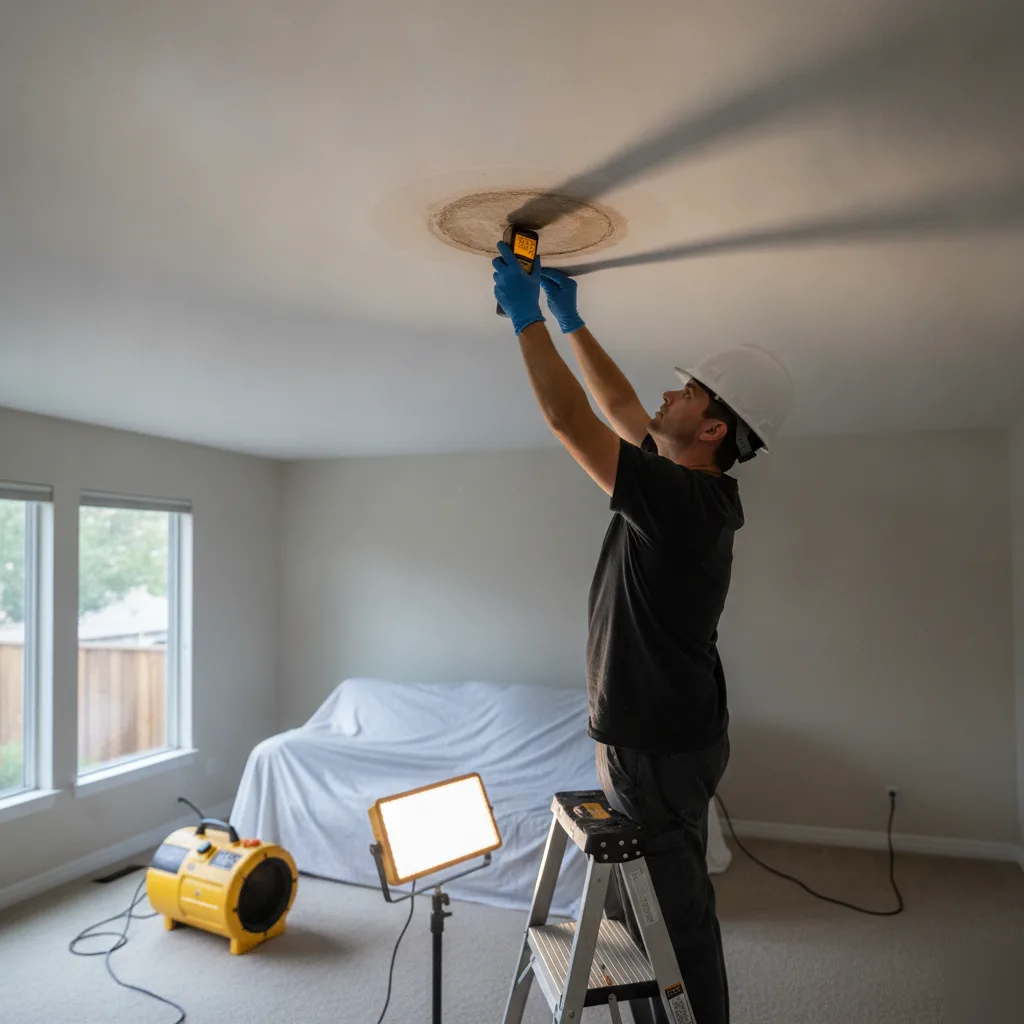
We check the ceiling, attic space, and all rooms below for hidden moisture migration.
Moisture Mapping & Thermal Scan
We find out exactly how far the water traveled, not just where it's currently dripping.
Emergency Water Extraction
Pumps pull out standing water and saturated materials before they soak deeper into joists.
Structural Drying & Commercial Dehumidification
Equipment runs for a few days to extract deep moisture out of structural framing.
Antimicrobial Treatment & Mold Containment
Applied if the leak sat long enough to prevent spore germination.
Contents Protection & Pack-Out
Belongings and furniture below the leak are protected or safely relocated.
Direct Insurance Billing Documentation
We document everything with daily moisture logs for your insurance adjuster.
Need help with Ceiling Leak / Roof Leak Water Damage?
Get a Free Estimate. First Response Water Mold Fire is ready to help.
Verifying a Ceiling Is Fully Dry Before Any Repair Begins
Here's the mistake we see constantly: a ceiling looks dry and feels dry, so the homeowner patches it and paints over it. Three weeks later there's a brown ring back on the paint, or worse, a musty odor that won't quit. Dry to the touch and dry inside the cavity are two different things.
We use moisture meters, not guesswork. Under IICRC S500 guidelines, drywall, insulation, and framing all get checked against a dry standard. Older homes around Willow Glen still have original plaster and lath ceilings that hold water far longer than modern drywall. Skip that step there and you're patching over an active hazard.
Our Clearance Verification Protocol:
- Moisture meter readings on the ceiling drywall or plaster itself.
- Readings above the ceiling line in the attic or floor cavity wherever the leak traveled.
- Readings on exposed framing and structural joists, not just the surface sheetrock.
- Daily monitoring logs comparing numbers to baseline dry materials nearby.
- A final comparison reading before any drywall patch, texture, or paint goes back on.
We won't sign off until those numbers match dry framing elsewhere in the house. Rush this step and you're rolling the dice on hidden mold growth behind a freshly painted ceiling.
Preventing Repeat Leaks Through the Rainy Season
San Jose's rainy season usually runs from October through April. That's when we see repeat calls. Same house, same ceiling stain, because the first fix only covered the surface. A patched drywall spot with wet framing behind it is just a leak waiting for the next storm.
Older neighborhoods with bungalow and ranch-style homes from the 1940s and 50s often have original flashing around chimneys and roof valleys. That flashing wasn't built for decades of UV wear and atmospheric storms, making it the first thing to fail.
Essential Rainy Season Maintenance:
- Clear gutters and downspouts before fall storms so water doesn't back up under roof edges.
- Check attic insulation for compression or discoloration indicating previous moisture intrusion.
- Inspect flashing around skylights, chimneys, and roof valleys for cracked sealant or lifted edges.
- Ask about crawl space encapsulation if your home has a history of damp framing or musty smells.
- Keep an eye on ceiling paint for yellowing or bubbling immediately following heavy rain.
We use moisture mapping during the drying process to establish a baseline for your home. If a new stain shows up next winter, you'll know quickly whether it's the same spot or something new.
Request a Free Estimate & Ceiling Moisture InspectionFrequently Asked Questions
Common questions about Ceiling & Roof Leak Water Damage in San Jose.
How fast can you get someone out for a ceiling leak in San Jose?
We treat active ceiling leaks as same-day calls. Wet drywall and insulation can start growing problems in 24 to 48 hours, so waiting even one extra day can turn a small stain into a bigger repair. When you call, we ask a few quick questions about the stain and how it looks, then send a crew out for a free on-site estimate. If your stain is old, dry, and flat, it can usually wait for a normal inspection instead.
What happens when your crew arrives to check a ceiling leak?
We start by looking at the ceiling, the attic space, and any rooms below for hidden moisture. Then we run moisture mapping to see exactly how far the water traveled, not just where it's dripping. This tells us the real size of the problem before any work starts. From there we explain what we found, walk you through next steps, and get extraction and drying equipment moving fast if water is still active.
Are older San Jose homes more likely to have ceiling leak damage?
Yes, especially homes near downtown San Jose with original built-up roofing from the 1960s and 70s. Those roofs weren't built for our heavier winter storms, and small cracks let water travel along rafters before it ever shows on the ceiling. Older bungalows near the Rose Garden neighborhood and homes around Willow Glen with original plaster and lath ceilings hold trapped moisture much longer than modern drywall. These homes need extra attention during drying.
Do I call a roofer or a water damage company first for a ceiling leak?
Call both, but for different reasons. A roofer patches the actual hole, crack, or lifted shingle on the roof itself. We dry out and repair everything the water damaged once it got inside, like soaked insulation, drywall, and ceiling joists. Calling only a roofer leaves wet material behind that can lead to mold within weeks. Calling only us without fixing the roof source means the leak just comes back.
How long does it take to fully dry a water-damaged ceiling?
Drying usually takes a few days, not a few hours. After emergency water extraction pulls out standing water, we bring in dehumidification equipment and monitor moisture levels daily. We follow IICRC S500 guidelines, checking readings against dry material elsewhere in your home until the numbers match. Plaster and lath ceilings found in older Willow Glen homes often need more time than modern drywall to reach that dry standard.
How can I tell if my ceiling stain is an old leak or an active one?
Look at the edges and press it gently with your finger. A fresh, active leak has a soft, wet-looking border that keeps spreading day to day, and the drywall often feels spongy. An old, resolved leak leaves a hard, ring-shaped edge that hasn't changed in weeks. A musty smell with no visible stain can also mean water is hiding in the insulation, which still needs a same-day look.
Emergency Water Damage?
Pay Zero Upfront.
Direct insurance billing on covered claims with no hidden catch. Get immediate water damage repair & extraction in San Jose today. Contact us to book a free on-site estimate!
Feel Free to Contact Us or Book Services
First Response: Your best solution for accurate, immediate, and professional help for all your water damage repair and restoration needs in San Jose and Silicon Valley.
- 24/7 Friendly Support
- Professional IICRC-Certified Specialists
- 15+ Years Local Experience in San Jose
- Direct Insurance Billing & Itemized Claims
- Same-Day Water Damage Extraction