
Attic Water Damage Restoration in San Jose: Stop Hidden Moisture Before It Spreads
Roof leaks, clogged AC condensate pans, and storm wind-driven rain saturate attic insulation and rot ceiling rafters. We extract wet insulation, deploy commercial attic drying systems, and prevent mold growth.
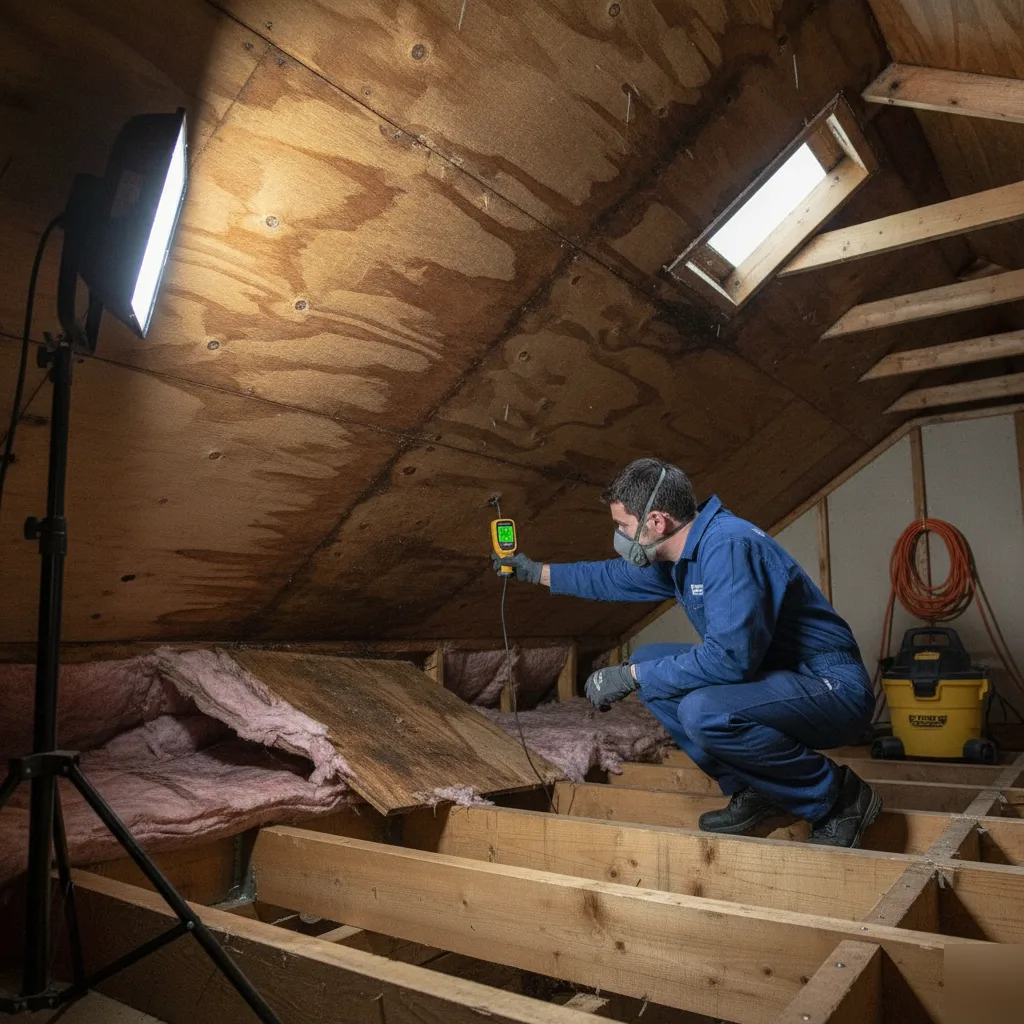
Signs Your Attic Has Active Water Damage
Quick Summary:Brown ceiling stains, a musty smell, sagging insulation, or visible water on the plywood are the clearest signs of active attic water damage. In San Jose, attic-mounted HVAC units and older roofing are common culprits, so a leak isn't always from the roof itself.
Most people don't go up in the attic until something forces them to. A dark ring on the bedroom ceiling, or a smell that wasn't there last month, usually signals a problem.
Key Symptoms of Attic Moisture Intrusion:
- Brown or yellow rings on ceiling drywall, especially below bathrooms or along hallway runs.
- A musty, damp smell when you open the attic access hatch, even if surfaces look dry.
- Insulation that's flattened, dark, or clumped together instead of fluffy.
- Water spots or dark streaks on the roof plywood decking or rafters.
- Rusted nail heads poking through the plywood, showing sustained moisture exposure.
A lot of San Jose tract homes from the 1960s and 70s have the HVAC air handler sitting right in the attic. When the condensate drain line clogs, that unit drips steadily onto the insulation below. Nobody notices until the ceiling stain shows up two rooms over.
We get calls where the homeowner assumed it was a roof leak, and it turned out to be an HVAC condensate line the whole time. If the wood up there feels soft or spongy under your hand, don't wait.
When an Old Attic Stain Doesn't Need Restoration
Not every mark on your attic sheathing means trouble. We climb into a lot of San Jose attics and find old brown rings from a roof leak that got fixed years ago. If the wood feels dry and hard, and the stain hasn't grown since you last looked, you're probably looking at history, not an active problem.
Here's how to tell the difference before you pick up the phone:
You can generally leave it alone if:
- The stain is dark brown or gray, flat, and stiff to the touch, not soft or spongy.
- No musty or fungal odor when you open the attic space.
- No new dark moisture rings appearing after recent storm rainfall.
- The insulation nearby is completely dry, not clumped or matted down.
- You know the roof or plumbing issue that caused it was already permanently repaired.
If the wood gives slightly when you press it, or you catch that damp, earthy smell, that's a different story. Mold can start growing within 24 to 48 hours in the right warm attic conditions.
Learn more on our main water damage restoration service pageWhat Happens During Attic Water Restoration
Attic water restoration in San Jose homes follows a specific sequence. Because attics trap heat and moisture differently than living spaces, technicians start with a full inspection using moisture meters and thermal imaging cameras. They map exactly where water has traveled across rafters, decking, insulation, and ceiling drywall below.
Before any drying begins, the crew confirms the water source has stopped. Saturated blown-in cellulose or fiberglass batts compressed by water weight get removed and bagged for disposal, while wood framing is evaluated for structural integrity.
Full-Scope Attic Restoration Includes:
- Monitored structural drying using industrial air movers and dehumidifiers positioned for attic airflow patterns.
- Daily moisture readings on wood framing, decking, and adjacent ceiling drywall to track drying progress.
- Crawl space encapsulation when moisture has migrated downward through shared wall cavities.
- Odor removal treatments to address musty smells from trapped humidity or early mold growth.
- Contents recovery for stored boxes, holiday decorations, or personal items affected by the leak.
- Final repair and rebuild work, from replacing drywall to reinstalling insulation to current building code.
Need help with Attic Water Damage Restoration?
Get a Free Estimate. First Response Water Mold Fire is ready to help.
How Drying Is Verified Before the Job Is Closed
A dry-looking attic isn't the same as a dry attic. Wood framing, roof decking, and insulation can hold moisture well below the surface even after visible water has evaporated. We follow protocols set by IICRC S500 (water damage restoration) and S520 (mold remediation) standards, requiring documented, instrument-based proof of dryness.
A penetrating pin-type moisture meter is pressed into rafters and sheathing to measure moisture percentage compared to unaffected materials in the same attic, while thermal imaging cameras scan larger surface areas for hidden moisture footprints.
Our Instrument-Based Verification Protocol:
- Initial moisture mapping taken at job start to establish baseline and identify full affected boundaries.
- Daily readings tracking drying progress across framing, decking, and insulation as equipment runs.
- Final readings matching dry standards from unaffected areas of the attic before equipment is pulled.
- Thermal imaging at closeout to double-check hidden cavities and hard-to-reach corners near eaves and valleys.
- All readings logged with date, location, and moisture percentage for insurance documentation.
Every moisture reading and equipment log becomes part of a documented drying record submitted directly to your insurance adjuster. This objective data supports your claim and ensures full coverage for insulation replacement and structural repairs.
Why Winter Storms Drive Most Attic Leaks in San Jose
San Jose's rainy season runs from November through April. Most attic leaks happen during intense atmospheric river storm windows rather than steady drizzle. Wind-driven rain pushes water sideways and upward under roofing materials, where it penetrates the deck and travels along rafters before dripping into the attic.
Ventilation plays a critical role in the aftermath: after a leak is patched, wet framing and insulation cannot dry if soffit and ridge vents are blocked or undersized. Trapped humid air recirculates, creating conditions for mold growth.
Proactive Attic Maintenance Steps:
- Schedule a roof and attic inspection each September or October before major storms arrive.
- Check that soffit vents are clear of insulation, debris, and pest nesting material.
- Confirm attic insulation is dry and evenly distributed, since compressed areas signal past leaks.
- Have flashing around chimneys, skylights, and vent pipes resealed proactively.
- Clear gutters and downspouts so water does not back up under the roof edge.
Emergency Water Damage?
Pay Zero Upfront.
Direct insurance billing on covered claims with no hidden catch. Get immediate water damage repair & extraction in San Jose today. Contact us to book a free on-site estimate!
Feel Free to Contact Us or Book Services
First Response: Your best solution for accurate, immediate, and professional help for all your water damage repair and restoration needs in San Jose and Silicon Valley.
- 24/7 Friendly Support
- Professional IICRC-Certified Specialists
- 15+ Years Local Experience in San Jose
- Direct Insurance Billing & Itemized Claims
- Same-Day Water Damage Extraction