
Appliance Leak Cleanup in San Jose: Stop Hidden Water Damage Before It Spreads
Leaking water heaters, split washing machine hoses, and dishwasher overflows send water migrating beneath kitchen cabinets and subflooring. We extract water fast, dry structural materials, and prevent mold growth behind walls.
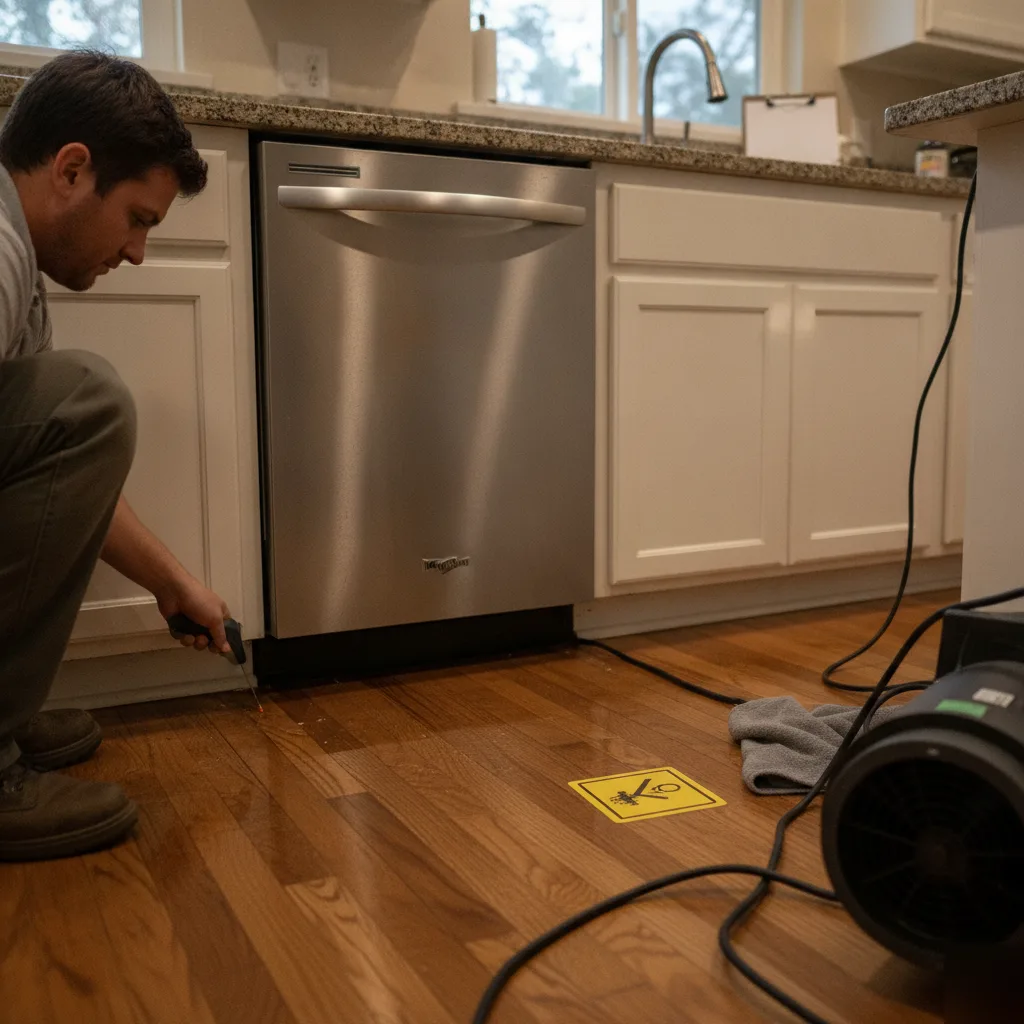
Spotting the Warning Signs of an Appliance Water Leak
Quick Summary: Appliance leaks from washers, dishwashers, refrigerators, and water heaters often go unnoticed for weeks. Damage happens behind or underneath the unit. Watch for warped flooring, swollen cabinet toe-kicks, musty odors, and water stains near these appliances. Catching them early can save thousands in San Jose homes with hardwood, laminate, or slab foundations.
Every major water-using appliance has failure points. Knowing them helps you catch a leak before it spreads. Washing machines use rubber or braided supply hoses that degrade over five to ten years. This is true for older San Jose homes in neighborhoods like Willow Glen or Rose Garden, where original plumbing and hoses are still in use. Dishwashers commonly leak from worn door gaskets, cracked water inlet hoses, or loose drain connections under the sink cabinet. Refrigerators with ice makers or water dispensers have a thin plastic or copper line behind the unit. A slow drip here can pool unnoticed for months. Water heaters can overflow from a failed temperature and pressure relief valve, a corroded tank seam, or sediment buildup that causes internal pressure issues.
Common Appliance Breakdown Points:
- Washing machine: cracked, bulging, or disconnected supply hoses; puddling behind or under the unit.
- Dishwasher: warped or soft flooring in front of the unit, water pooling under the sink cabinet.
- Refrigerator: damp carpet or flooring near the back panel, drip marks along the ice-maker line.
- Water heater: rusty water stains, pooling around the base, or a musty smell in the garage or closet.
These leaks are hidden behind or underneath the appliance. The first visible clue is usually secondary damage, not the leak itself. Warped or cupping flooring near the dishwasher or refrigerator indicates water seeping. Swollen or discolored cabinet toe-kicks in the kitchen are a strong indicator. A persistent musty smell in a laundry room or utility closet is another sign. Water stains on ceilings below upstairs laundry rooms, common in many South San Jose two-story homes, show a leak has traveled further than expected.
When a Wet Floor Doesn't Need a Restoration Crew
Not every appliance leak in a San Jose home becomes a restoration job. If a dishwasher line breaks while you're in the kitchen, and water stays on sealed tile or finished concrete, you can often manage it yourself. You won't need a crew, a truck-mounted extractor, or industrial air movers. Surface type and response time matter most. Hard, non-porous flooring like ceramic tile, porcelain, or a sealed concrete slab does not absorb water like wood or drywall. If you catch the spill and dry it within about an hour, there's usually nowhere for moisture to hide.
This situation is common in newer Evergreen and North San Jose kitchens with tile floors. It also happens in garages and laundry rooms with sealed concrete, where a washing machine supply line has failed. In these cases, a wet-vac, some old towels, and a box fan or two running for a few hours can fix the issue. Check back the next day for any lingering smell, soft spots, or discoloration along baseboards or cabinet toe-kicks.
You can generally manage cleanup on your own if:
- Water touched only tile, sealed concrete, or another non-porous surface.
- The leak was noticed and dried completely within about an hour.
- No standing water reached baseboards, cabinets, or wall cavities.
- No musty odor or visible discoloration appears 24 hours later.
- The floor feels solid with no give or sponginess underfoot.
The situation changes quickly once wood, drywall, carpet, or subflooring is involved. Older homes in Willow Glen and the Rose Garden district often have original hardwood or engineered wood floors. These can start cupping or staining within hours of contact with water. Tract homes throughout Evergreen and Almaden frequently use laminate flooring over particleboard subfloor, which swells fast and rarely returns to its original shape once saturated. Carpet and pad act like a sponge, wicking water sideways beyond the visible wet spot.
Time is the other factor. Water that sits overnight, even on tile, usually moves under baseboards, into grout lines, or beneath appliances and cabinetry where a fan alone can't reach. Surface drying can mask a problem still developing underneath.
Repair the Appliance, Restore the Water Damage: Two Separate Jobs
When a dishwasher supply line splits or a washing machine hose blows in a San Jose kitchen or laundry room, the instinct is to call an appliance repair technician, get the part fixed, and move on. That instinct is only half right. The technician's job ends at the appliance. They replace the cracked valve, tighten the fitting, or swap the pump, then confirm the unit no longer leaks. They are not trained or equipped to evaluate where the water went before the repair happened.
Water from a slow leak under a refrigerator or behind a washing machine doesn't stay put. It travels along subfloor seams, wicks into baseboards, and pools under vinyl or laminate flooring. In many Willow Glen and Rose Garden homes with original hardwood or particleboard subfloors, that moisture can sit hidden for weeks. This softens wood and feeds mold growth that starts within 24 to 48 hours. In newer slab-foundation builds around Evergreen or Berryessa, the water may migrate under cabinetry or along the slab edge.
Appliance Repair vs. Water Damage Restoration:
Appliance Repair Technician
Diagnoses and replaces the failed mechanical part, stops active water flow, and confirms unit operation. Does not inspect or remediate structural moisture or mold.
Water Damage Restoration Crew
Measures moisture in flooring, subfloor, and walls using calibrated meters, extracts trapped water, dries structural framing with commercial dehumidifiers, and prevents mold.
Need help with Appliance Leak Cleanup?
Get a Free Estimate. First Response Water Mold Fire is ready to help.
How Professional Appliance Leak Cleanup Works
What happens once we get to your place? It's not just mopping up water. We follow the same drying science laid out in the IICRC S500 standard, the guide for water damage work. Here is how a professional cleanup goes:
Shut Off Water & Isolate Source
We confirm the supply valve is closed to stop water from spreading further.
Emergency Water Extraction
Commercial pumps pull out standing water fast before it soaks deeper into flooring and cabinetry.
Thermal & Moisture Mapping
We check walls, subfloor, and cabinet bases with non-invasive meters to locate hidden moisture paths.
Structural Drying & Dehumidification
Commercial LGR dehumidifiers and axial air movers run until readings reach certified dry standards.
Daily Moisture Monitoring
We log progress daily so drying isn't stopped too early before subfloors normalize.
Antimicrobial Treatment
Applied in spots where moisture sat long enough to risk mold spore germination.
Insurance Claim Documentation
Photos, drying logs, and itemized billing sent directly to your adjuster.
That documentation step matters more than people think. Many San Jose homes, especially older ones near Willow Glen with original 1950s subfloors, hide water damage under hardwood or tile for days. Moisture mapping catches what your eyes can't.
Verifying Your Home Is Fully Dry
Here's the thing about water: it doesn't care that the floor looks dry.A dishwasher leak in a San Jose kitchen can soak the subfloor for days before anyone notices a soft spot near the cabinet toe kick. So we don't just eyeball it and call it done.
Our team uses moisture meters and thermal imaging to check what you can't see. We check the subfloor under the appliance, the drywall behind the water heater, and the cabinet base next to the washer. Following IICRC S500 guidelines, we take daily readings until the numbers hit a dry standard.
Critical Inspection Points We Verify:
- Subfloor and flooring material moisture content, checked at multiple marked points.
- Wall cavities behind the leaking appliance, especially drywall paper facing and baseboards.
- Cabinet bases and toe kicks near dishwashers and under-sink plumbing units.
- Adjacent rooms, since water travels along subfloor seams further than expected.
Carpet can feel dry on top while the pad underneath stays soaked for a week. We see this with washer leaks in older San Jose homes with slab foundations. Water has nowhere to go but sideways under the flooring. We log every reading to give your insurance adjuster the exact proof they require.
Request a Free Estimate & Moisture CheckFrequently Asked Questions
Common questions about Appliance Leak Cleanup in San Jose.
How fast can you get to my house after an appliance leaks in San Jose?
We offer 24/7 water, mold, and fire restoration service across San Jose, so you can call any time day or night. Appliance leaks from washers, dishwashers, and water heaters don't wait for business hours, and neither do we. The sooner we arrive, the better your odds of stopping water from soaking into flooring, cabinets, or subfloor. If you spot puddling near a refrigerator or hear a running sound from your water heater closet, call right away instead of waiting to see if it dries on its own.
What happens when your team arrives for an appliance leak cleanup?
We start with a free on-site estimate to find the source and check how far the water traveled. One team handles the full job, from extraction to drying, so you're not coordinating multiple companies. We pull back the appliance, check hoses and connections, and inspect nearby flooring, baseboards, and cabinet toe-kicks for hidden moisture. This matters because leaks from dishwashers and refrigerators often spread under cabinets before you ever see a stain. You'll know exactly what's wet and what needs drying before we start.
Why do appliance leaks cause more damage in older Willow Glen and Rose Garden homes?
Older homes in Willow Glen and the Rose Garden district often have original hardwood floors and aging supply hoses that are still in use today. Hardwood and engineered wood can start cupping or staining within hours of contact with water, much faster than tile or sealed concrete. These homes also tend to have washing machine hoses that are five to ten years old or older, which are more likely to crack or bulge. If your home fits this description, checking hoses regularly can catch a leak before it spreads under your floors.
Can I clean up an appliance leak myself, or do I need a professional?
You can often handle small leaks yourself if the water only touched tile or sealed concrete and you dried it within about an hour. A wet-vac, towels, and a fan for a few hours usually take care of it. But if water reached wood flooring, carpet, drywall, or sat overnight, professional cleanup is the safer choice. Wood and laminate can swell and stain fast, and drywall wicks moisture upward long after the surface feels dry. When in doubt, call us for a free estimate before deciding.
How do I know if an appliance leak damaged my subfloor without me noticing?
Warped or cupping flooring, swollen cabinet toe-kicks, and a musty smell in the laundry room or under the sink are the biggest clues. These signs show up after water has already been sitting under or behind the appliance for a while, since the leak itself is usually hidden. In South San Jose two-story homes, water stains on a downstairs ceiling can mean a leak has traveled from an upstairs laundry room. If you see any of these signs, pull the appliance out and check hoses before the damage spreads further.
Should I call an appliance repair technician or a water damage company first?
Call both, because these are two separate jobs. An appliance repair technician fixes the cracked valve, hose, or pump so the unit stops leaking, but their job ends there. They don't check where the water traveled underneath cabinets, flooring, or subfloor. In Willow Glen and Rose Garden homes with original hardwood, hidden moisture can feed mold growth within 24 to 48 hours. Getting a restoration team out at the same time as the repair keeps a small appliance fix from turning into a bigger flooring or mold problem.
Emergency Water Damage?
Pay Zero Upfront.
Direct insurance billing on covered claims with no hidden catch. Get immediate water damage repair & extraction in San Jose today. Contact us to book a free on-site estimate!
Feel Free to Contact Us or Book Services
First Response: Your best solution for accurate, immediate, and professional help for all your water damage repair and restoration needs in San Jose and Silicon Valley.
- 24/7 Friendly Support
- Professional IICRC-Certified Specialists
- 15+ Years Local Experience in San Jose
- Direct Insurance Billing & Itemized Claims
- Same-Day Water Damage Extraction