
Antimicrobial & Disinfection Treatment in San Jose: Stop Contamination Before It Spreads
After Category 3 water events — sewage backups, creek flooding, or contaminated overflow — surfaces need more than drying. We apply EPA-registered antimicrobial treatment with proper containment and required dwell time, then verify clearance before closing the job.
Why San Jose's Creek Flooding Raises Contamination Risk
Quick Summary: San Jose sits along Coyote Creek and the Guadalupe River. When these rise, water enters homes carrying soil, runoff, and often sewage overflow. This is Category 3 water under the IICRC S500 standard. Antimicrobial and disinfection treatment is not optional after a creek flood.
Coyote Creek has flooded San Jose neighborhoods before. When it does, the water comes from outside — through soil, storm drains, and sometimes overwhelmed sewer lines. That water is loaded with bacteria before it ever touches your drywall.
We treat this differently than a dishwasher leak or a burst pipe. Floodwater from a creek or river gets classified as black water — IICRC's Category 3. Every surface it touched needs more than a mop and a fan. It needs antimicrobial treatment to reduce bacteria before drying finishes.
Drywall Can Look Dry — Bacteria Does Not Care How the Surface Looks
Homes near low-lying stretches close to Coyote Creek and the Guadalupe River face this more than most in San Jose. If your crawl space or first floor took on creek water during a storm, treat it as contaminated water from the start. We see homeowners try to just dry things out and skip this step — then deal with smell and staining weeks later because the bacteria was never addressed.
Water Category Determines How Urgent Treatment Is
Not every water problem needs antimicrobial treatment. That surprises people, but it is true. It is the first thing we figure out on any job.
The IICRC S500 standard splits water damage into three categories. That category drives the whole plan.
Category 1 — Clean Water
Fresh supply line break or overflow from a clean source. Often needs only fast drying if caught within 24 to 48 hours. Antimicrobial treatment usually not required.
Category 2 — Gray Water
Water that has picked up contamination — overflow from a dishwasher, washing machine, or similar source. Usually needs antimicrobial treatment on affected surfaces and materials.
Category 3 — Black Water
Sewage backups, creek floodwater, or any water carrying bacteria and pathogens. Always needs antimicrobial treatment plus removal of porous materials that cannot be cleaned.
We see more Category 3 calls than you would expect in older parts of San Jose — especially near Willow Glen, where original clay sewer laterals crack and back up during heavy winter rain. Those jobs do not wait.
Here is the part people miss: Category 1 water does not stay Category 1 forever. Leave it sitting in a warm crawl space for two days and it starts behaving like Category 2 — sometimes worse. Time and contamination source decide the treatment, not how clear the water looks.
See our full mold remediation processWhen Surface Cleaning Is Enough (And When It Isn't)
Not every wet spot needs antimicrobial treatment. We get calls where someone spilled a glass of water on the carpet three days ago and they are worried about mold. That is not a mold job.
If water gets cleaned up and the area is fully dry within 24 to 48 hours, a good wipe down with soap and water is usually enough. Small kitchen spills, a little condensation on a window sill, a leak you caught fast and dried with a fan — regular household cleaning handles these fine. You do not need us for that, and we will tell you so if you call and describe it.
When It Crosses the Line — Professional Treatment Is Needed:
- Water sat for more than 48 hours before anyone dried it.
- The water came from a sewage backup or was carrying contamination.
- Drywall, carpet padding, or wood flooring stayed wet and soft to the touch.
- You can smell a musty odor even after the surface looks dry.
- There is visible mold growth beyond a small, isolated spot.
Need help with Antimicrobial & Disinfection Treatment?
Get a Free Estimate. First Response Water Mold Fire is ready to help.
Once water sits long enough, it soaks into porous materials like drywall, subfloor, and insulation. Wiping the surface does not touch what is growing underneath. This matters more in older San Jose homes with raised foundations and crawl spaces. If you are standing there wondering which category you are in, that is a fair question to ask us directly before you decide anything.
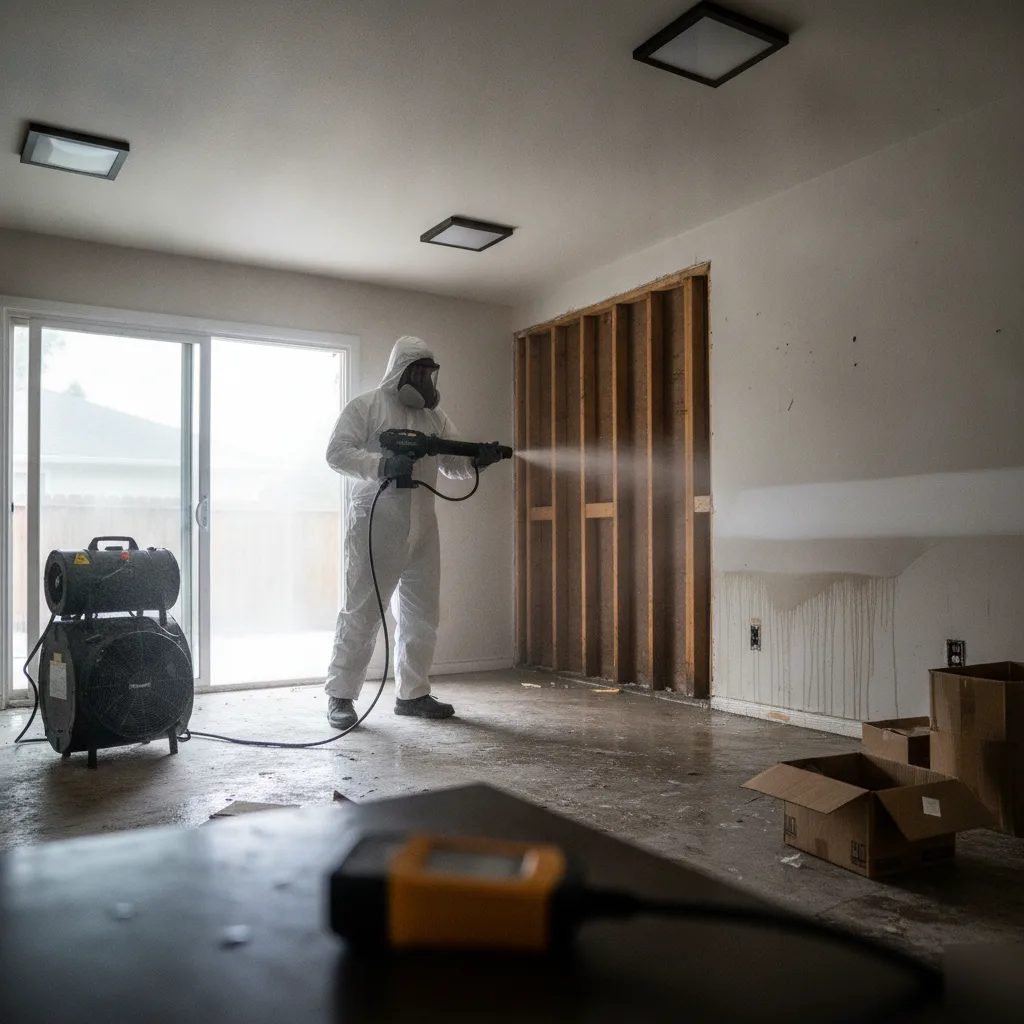
What Happens During Professional Disinfection
Folks picture disinfection as someone walking through with a spray bottle. It is not that — not when it is done right. Here is how we run it on a job:
Inspection & Source Classification
We inspect the space first to determine if we are dealing with sewage, mold aftermath, or general contamination. The category determines the entire treatment plan.
Containment Setup
We set up containment so the treated area stays separate from the rest of the home. This matters more in older San Jose houses with open floor plans where air moves freely between rooms.
EPA-Registered Antimicrobial Application
We apply an EPA-registered antimicrobial to affected surfaces, framing, and hard-to-reach spots like subfloor and crawl space framing.
Required Dwell Time
We let the product dwell for the manufacturer's required contact time. Rushing this step is the number one reason DIY treatments fail.
HEPA Air Scrubbing
We run air scrubbing and HEPA filtration to pull contaminated particles out of the air — not just off surfaces.
Final Walk-Through & Verification
We check that odor and visible residue are gone before we call it done. We do not close out a job on a clean-looking surface alone.
Most jobs run through all six steps in a single visit. Bigger jobs — like a crawl space after a slab leak — sometimes need a second pass once the area is fully dry. That is normal, not a sign something went wrong. We have walked into homes where a homeowner tried this with a store-bought cleaner. Surfaces looked fine. The smell came right back within a week.
How to Confirm the Job Is Done
A fresh smell and clean-looking walls do not tell you much. We have walked into homes where a previous cleanup looked great on day one. The smell was back by week three. So how do you know the antimicrobial treatment held?
Real verification is not a feeling — it is documentation. A job done right leaves a paper trail you can point to later, for your own peace of mind or for your insurance file.
What Proper Post-Treatment Verification Includes:
- Post-treatment moisture readings on the treated materials — not just a visual check.
- Photos of the application areas before and after, timestamped.
- A written scope showing exactly which surfaces got treated and with what method.
- For mold jobs, a post-remediation verification step consistent with IICRC S520 guidance before the area gets closed back up.
- No lingering musty or chemical odor once the area has aired out for a day or two.
In older crawl spaces around San Jose — especially homes built before the 1980s with limited ventilation — we always recommend a follow-up moisture check a few weeks out. Vapor barriers and airflow issues in these spaces can undo a treatment fast if they are not addressed alongside it.
If a company can't hand you documentation, that is a red flag worth asking about before you sign off on the work. We build this verification step into our process and provide it in writing. You should not have to just take our word for it.
Common Questions About Antimicrobial & Disinfection Treatment
Common questions about Antimicrobial & Disinfection Treatment
How fast should I call after creek water or sewage gets into my San Jose home?
Call us as soon as the water stops rising or the backup is contained. Category 3 water, like flooding from Coyote Creek or a sewage backup, starts growing bacteria fast, especially in warm weather. Waiting even a day or two lets contamination spread deeper into drywall and flooring. We treat these calls as urgent because the longer black water sits, the more materials need to be removed instead of cleaned. Quick action after a creek flood or backup keeps the job smaller and faster to finish.
What happens when your crew arrives to treat contamination in my home?
We start with an inspection to figure out if we are dealing with sewage, mold, or general contamination. From there, we set up containment so treated air does not spread through the rest of your house. This matters most in older San Jose homes with open floor plans. We apply an EPA-registered antimicrobial, let it sit for the required contact time, then run air scrubbing before a final walk-through. Most homes only need one visit, but larger crawl space jobs sometimes need a second pass.
Do I need antimicrobial treatment after a sewer backup near Willow Glen?
Yes, every sewage backup needs antimicrobial treatment, no exceptions. Older homes near Willow Glen often have original clay sewer laterals that crack and back up during heavy winter rain. That water is classified as Category 3 under the IICRC S500 standard, meaning it carries bacteria from the start. Skipping treatment and just drying the area leaves contamination behind, even if the surface looks fine. We always treat these jobs as urgent because the health risk does not go away when the water disappears.
Do I need professional treatment for a small water spill or leak?
No, not always. If water is cleaned up and the area dries within 24 to 48 hours, a simple soap and water wipe down usually handles it. Small kitchen spills or a leak you caught fast rarely need professional treatment. But if water sat longer, came from a sewage source, or left drywall soft to the touch, that is a different situation. We will ask you a few questions on the phone to help you figure out which category your problem falls into before you spend money you do not need to.
How long does professional disinfection treatment usually take?
Most homes are done in a single visit, from inspection through the final walk-through. The process includes containment setup, applying antimicrobial to affected surfaces, letting it dwell for the required contact time, then air scrubbing to clear particles from the air. Bigger jobs, like a crawl space after a slab leak, sometimes need a second visit once the area has fully dried out. That second pass is normal and does not mean the first treatment failed.
Can I just treat mold or contamination myself instead of calling a pro?
You can try, but it often does not fully solve the problem. We have seen homeowners use store-bought sprays without letting the product sit long enough to kill bacteria, which is the top reason DIY treatments fail. Surface spraying also misses hidden spots like subfloor and crawl space framing, where contamination keeps growing unseen. Professional treatment includes containment, proper dwell time, and air filtration — steps that are hard to match with a spray bottle from the hardware store.
Emergency Water Damage?
Pay Zero Upfront.
Direct insurance billing on covered claims with no hidden catch. Get immediate water damage repair & extraction in San Jose today. Contact us to book a free on-site estimate!
Feel Free to Contact Us or Book Services
First Response: Your best solution for accurate, immediate, and professional help for all your water damage repair and restoration needs in San Jose and Silicon Valley.
- 24/7 Friendly Support
- Professional IICRC-Certified Specialists
- 15+ Years Local Experience in San Jose
- Direct Insurance Billing & Itemized Claims
- Same-Day Water Damage Extraction