
Water Damage Restoration Near Atherton, CA Service Areas
24/7 Water, Mold & Fire Restoration — Locally Based in San Jose

Restoration Services in Atherton, CA
IICRC-certified rapid response teams available 24/7. Direct insurance billing, state-of-the-art moisture mapping, and hospital-grade sanitization.
Water Damage Repair & Extraction
A burst pipe, failing water heater, or sudden leak requires immediate professional water damage repair. Our San Jose technicians arrive in under 30 minutes to extract water, repair damaged structures, and dry your property thoroughly. Free on-site estimate, no trip fee.
Mold Remediation & Removal
Water damage left unchecked can become a mold problem within 24-48 hours. Our San Jose team, certified by IICRC, contains, eliminates, and treats mold at its source, not just on the surface, using negative pressure air containment systems and HEPA filtration to prevent the spread of spores.
Fire Damage Restoration
Emergency fire recovery, structural soot cleaning, thermal fogging odor removal, and climate-controlled contents pack-out & storage.
Structural Drying & Dehumidification
Wet walls, subfloors, and framing that aren't fully dried lead to hidden mold and structural warping. We use commercial-grade LGR dehumidifiers and high-velocity axial fans to confirm your property reaches 100% dry standard before closing the job.
Sewage & Category 3 Black Water Cleanup
Sewage backups and Category 3 water expose your home to dangerous pathogens and health risks. We extract biohazard waste, sanitize contaminated surfaces, and apply hospital-grade disinfectants following strict IICRC and OSHA protocols.

What's Covered on This Page
25min
Average response
94027
Service ZIP code
24/7
Live dispatch
How Older Single-Family Homes Handle Water Damage
Atherton's older single-family homes sit on large, mature lots that create their own set of water damage risks, from root-invaded pipes to supply lines that run far longer than most plumbers ever see. Even homes that have been remodeled top to bottom often still run on original drainage infrastructure that fails quietly, out of sight, until it doesn't. Restoration work here frequently spreads past the main house into guest houses, cabanas, and other detached structures on the same lot.
Many Atherton properties, especially those on the town's signature one-acre-plus parcels, were originally built between the 1950s and 1970s. A large share have since been extensively remodeled or rebuilt from the ground up, but it's common for the underground utilities, particularly water supply lines and drainage systems, to date back to the original construction. That creates a mismatch: a home can look modern and beautifully maintained above ground while relying on plumbing infrastructure that's 40, 50, even 60 years old underneath it.
The scale of these lots makes the problem worse. A supply line running from the street to a house set back several hundred feet, or a drain line snaking through a landscaped yard to a distant sewer connection, simply has more opportunity to develop a slow leak than a comparable line on a standard suburban lot. These long runs often pass beneath lawns, garden beds, and hardscape, so a leak can go on for months, quietly saturating soil and undermining foundations, long before it ever surfaces as a visible problem inside the home.
Mature landscaping is part of what makes Atherton Atherton, and it's also a major contributor to underground pipe failures. Established oaks and redwoods, some decades old, send root systems outward hunting for moisture, and older clay or cast iron pipes are especially vulnerable at their joints and seams. Root infiltration can crack a pipe outright or simply widen a small gap until soil and water start working their way in routinely, leading to blockages, backups, and eventually leaks that travel toward the foundation.
- ICamera inspection of drain lines to locate root intrusion or joint separation in cast iron or clay pipe
- IIMoisture mapping around foundations where mature trees sit close to the home
- IIIAssessment of crawlspace and basement areas for standing water tied to backed-up drain lines
- IVEvaluation of detached structures, including guest houses, pool cabanas, and garages, which often share aging supply or drain connections with the main house
- VDocumentation of pre-existing remodel work to distinguish new plumbing from original infrastructure
Basement and crawlspace flooding in these homes usually traces back to aging cast iron or clay drain lines rather than one dramatic pipe burst. Restoration crews working in Atherton often find that the water damage visible inside a home is the last symptom of a problem that started outside, at a root-compromised drain line or a slow supply leak beneath a side yard. Because so many properties also include guest houses, pool cabanas, and other detached structures, restoration work here regularly means treating water damage in more than one building on the same lot, since those structures often tie into the same original-era plumbing as the main residence.
How Our Team Reaches the Atherton Area
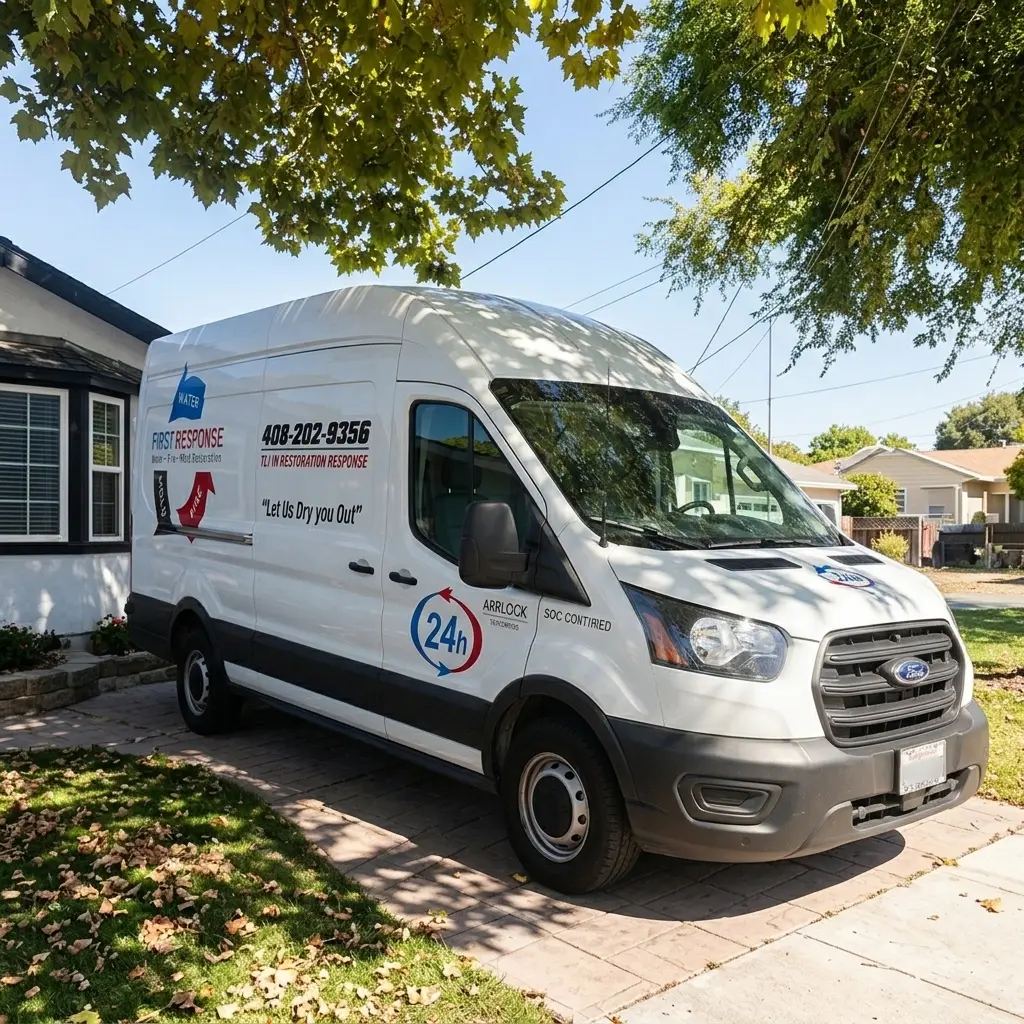
Our restoration crews are based at 666 Commercial St in San Jose, and the drive to Atherton is one we make often. Under normal traffic, it takes about 25 to 30 minutes heading north through San Jose and onto Highway 101, then onto El Camino Real or Marsh Road depending on which Atherton neighborhood we're headed to. We plan routes in real time using live traffic data so technicians take whatever path is fastest at the moment the call comes in.
Bay Area traffic does factor into our scheduling. During peak commute windows, especially weekday mornings between 7 and 9 a.m. and evenings between 4 and 6 p.m., congestion on Highway 101 or backups along El Camino Real can stretch that same trip to 40 or 45 minutes. Our dispatch team builds this variability into arrival windows, so homeowners get a realistic estimate instead of an optimistic one that falls apart the moment rush hour hits.
Arriving at an Atherton property is a different experience than pulling up to a typical suburban home, and our techs are trained for it. Many estates sit behind long private driveways, security gates, or keypad entries that require coordination with homeowners or property managers before a truck can even reach the front door. We routinely call ahead to confirm gate codes, intercom access, or scheduled arrival times with on-site staff, so equipment isn't sitting idle at the curb while access gets sorted out.
- IConfirming gate codes or intercom access before the truck departs San Jose
- IIIdentifying circular driveways that allow trucks to stage without blocking a homeowner's exit
- IIILocating detached garages, guest houses, or pool houses that may need separate equipment runs
- IVAccounting for landscaping, fountains, or hardscape features that limit hose and cable placement
- VCoordinating with property caretakers or security staff who may be the first point of contact on arrival
Equipment staging gets planned before the truck ever leaves the yard. Because so many Atherton lots feature circular driveways, detached garages, or separate guest structures, our team maps out where extraction units, air movers, and dehumidifiers will go before we arrive, so equipment isn't being repositioned once we're on-site. That upfront planning matters most on water and mold damage calls, where every extra minute of standing water or trapped moisture raises the risk of structural damage or mold spreading into walls, flooring, and cabinetry.
What Makes Atherton's Large Lots and Mature Trees a Factor
Atherton lots aren't small. Most sit on a half acre or more, tucked behind long driveways off streets like Selby Lane, Stockbridge Avenue, and Almendral Avenue. That space is part of what makes this town what it is. But it also means a leak or a slow roof drip can go unnoticed far longer than it would on a tight city lot where the neighbor is right next door.
The oak canopy is the other piece of it. Atherton's tree ordinance protects heritage oaks, and for good reason, those trees are old and genuinely beautiful. But roots from a mature oak can shift foundations and crack drain lines over the years. Leaves and debris pile up in gutters faster than most homeowners expect, especially on the shaded north side of a property. Clogged gutters push water back under roof edges and into attic spaces. We've pulled water-soaked insulation out of attics on properties near Fair Oaks Lane where the homeowner had no idea a gutter had been overflowing for weeks.
Big lots also tend to come with older wells, irrigation lines, and sometimes septic systems that newer neighborhoods just don't have. A slab leak or an aging irrigation main can soak into the soil for days before it ever shows up as a soft spot in the yard or a damp baseboard inside. And because the house sits so far from the street, that kind of leak isn't likely to get flagged by a passerby the way it might in a denser neighborhood.
Here's what we watch for on Atherton properties specifically:
- IAttic and roof leaks hidden by dense oak canopy that blocks visual inspection from the ground
- IIGutter overflow and roof edge saturation from heavy leaf drop in fall and winter
- IIISlab leaks and irrigation line failures on large-acreage properties with long buried runs
- IVCrawl space moisture buildup under older homes with limited ventilation
- VBasement or lower-level dampness on estate homes with partial below-grade construction
None of that is unusual out here, it's just part of owning a bigger, older, more wooded property. We do moisture mapping and daily monitoring on these jobs because a property this size can have more than one problem area going at once. Crawl space encapsulation might make sense on one Atherton home while a neighbor two lots down just needs structural drying after a burst pipe. We size the equipment and the plan to the actual square footage and layout, not a generic template.
So if you're noticing a musty smell near a shaded wall, or water stains where a roofline meets an oak-covered section of the house, don't wait on it. Mold spreads fast once moisture settles in under that kind of canopy cover.
Active water emergency?
Call 408-202-9356 — under 30 min response.
Common questions about Atherton, CA in Atherton
How fast can you reach an Atherton property from your San Jose location?
It usually takes 25 to 30 minutes to reach Atherton under normal traffic. We head north on Highway 101, then take El Camino Real or Marsh Road depending on your neighborhood. During peak commute hours, from 7 to 9 a.m. or 4 to 6 p.m., the drive can stretch to 40 or 45 minutes. We build this into your arrival window.
Why do older Atherton homes get water damage even after a full remodel?
Many Atherton homes were built between the 1950s and 1970s, and even after a top-to-bottom remodel, the underground water and drain lines often stay original. That mismatch means a beautifully updated house can still rely on 40 to 60-year-old plumbing underneath. Root intrusion and slow leaks in these old lines are common causes of hidden water damage.
Do you need access to my gate or driveway before arriving in Atherton?
Yes, we call ahead to confirm gate codes, intercom access, or arrival times with you or your property staff. Many Atherton estates sit behind long private driveways or security gates that require coordination before a truck can reach the door. We also plan for guest houses or pool cabanas that may need separate equipment staging.
Emergency Water Damage?
Pay Zero Upfront.
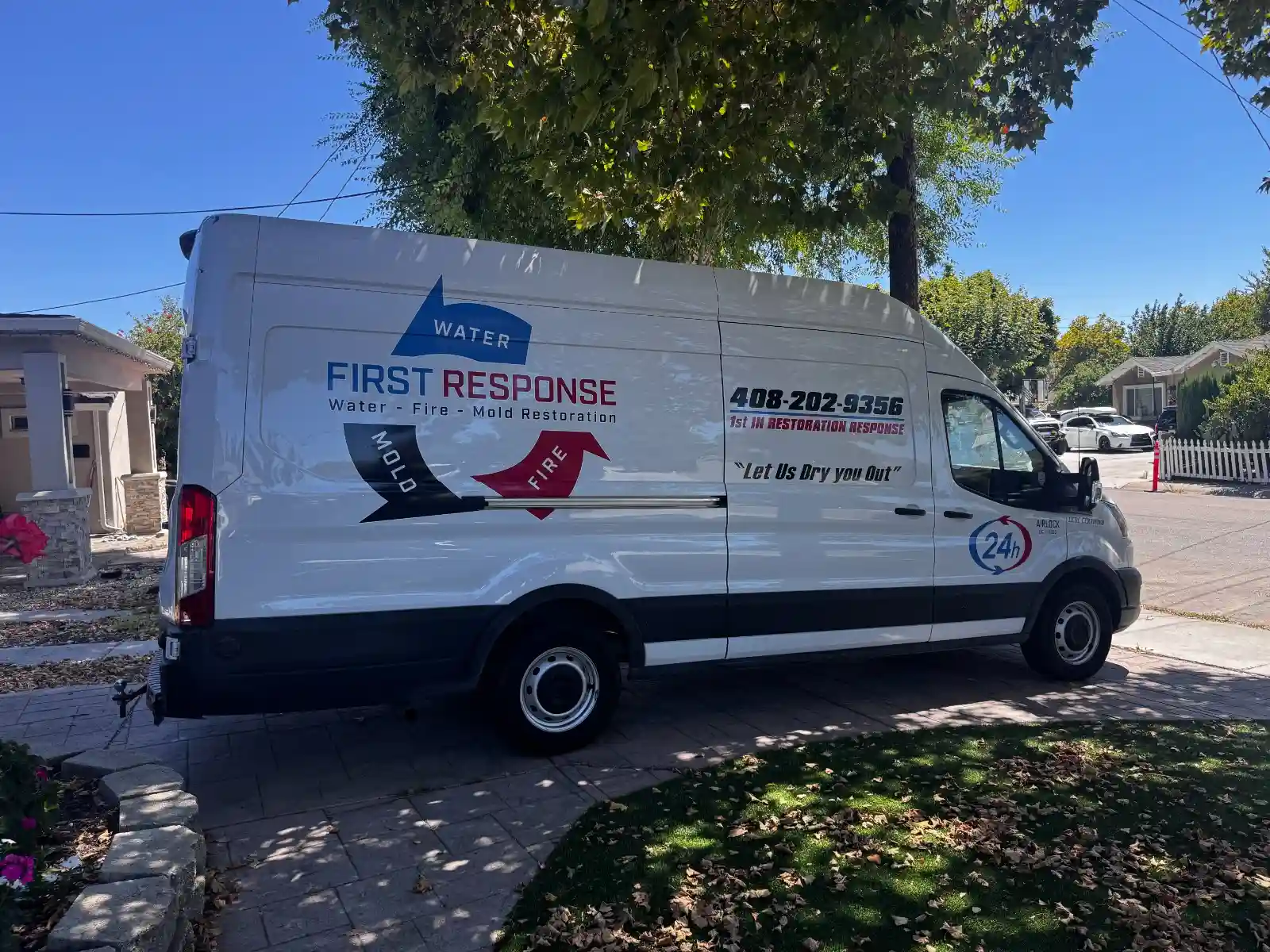
Direct insurance billing on covered claims with no hidden catch. Get immediate water damage repair & extraction in San Jose today. Contact us to book a free on-site estimate!
Feel Free to Contact Us or Book Services
First Response: Your best solution for accurate, immediate, and professional help for all your water damage repair and restoration needs in San Jose and Silicon Valley.
- 24/7 Friendly Support
- Professional IICRC-Certified Specialists
- 15+ Years Local Experience in San Jose
- Direct Insurance Billing & Itemized Claims
- Same-Day Water Damage Extraction